
Armour Stone Retaining Wall Cost in Red Deer and Central Alberta
Armour stone retaining walls in Red Deer and Central Alberta typically cost $150 to $350 per linear foot installed. Here is what drives that number and what to expect from a proper armour stone build.
By David Hutten, Owner, Green Ladder Contractors
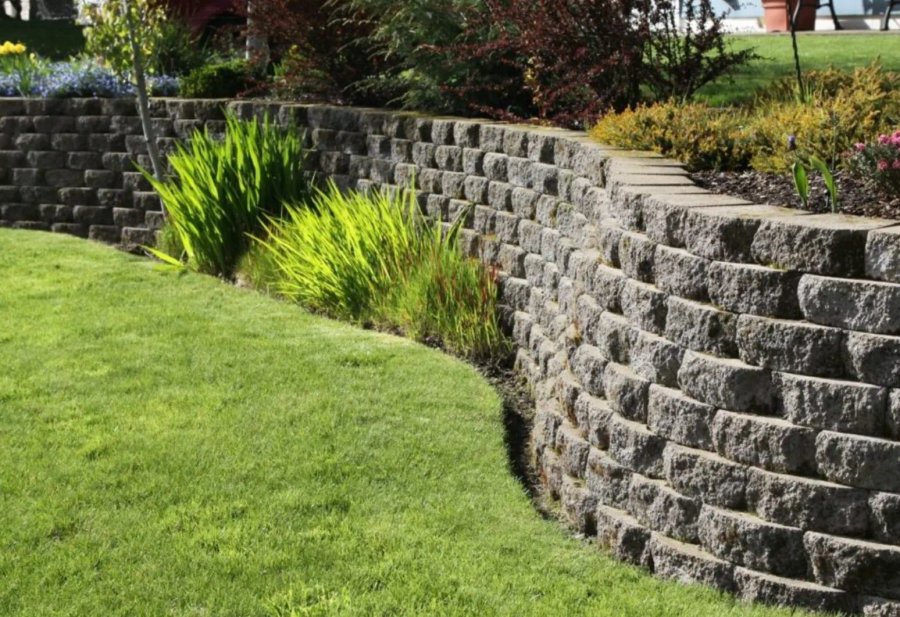
An armour stone retaining wall in Red Deer and Central Alberta typically runs $150 to $350 per linear foot installed, the premium end of residential retaining wall construction. The wide range reflects stone size, site access, wall height, and drainage complexity, all of which move the number for your specific site.
Armour stone retaining walls are the premium end of residential retaining wall construction in Central Alberta. The material is essentially permanent, the look is natural and landscape-appropriate, and the installation is heavy work that needs an excavator and someone who has placed it before. The cost reflects all of that.
Here is an honest breakdown of what armour stone costs in Red Deer and surrounding Central Alberta, and what separates a well-built armour stone wall from a poorly-built one.
How much does an armour stone wall cost per linear foot?
For residential projects in Red Deer and Central Alberta, armour stone retaining walls typically run $150 to $350 per linear foot installed. The wide range reflects real variation in project conditions:
- Stone size: Smaller stones in the 500-1000 kg range cost less per unit and can be placed on tighter sites. Larger stones (1000-2000 kg) require a larger excavator and more precise placement but build a wall faster per linear foot.
- Site access: Armour stone requires heavy equipment. If your yard has a wide, clear equipment lane, placement is straightforward. Tight access, overhead power lines, or obstacles that require repositioning all add time and cost.
- Wall height: A 3' armour stone wall requires one or two courses of stone. A 6' wall requires three or four courses, more excavation, more drainage material, and more total stone volume.
- Drainage complexity: Clay-heavy soil, high water tables, or walls in low-lying areas require more drainage infrastructure behind the wall. This is non-negotiable for wall longevity in Alberta's freeze-thaw cycle.
- Cap and finish: Some armour stone walls use the natural stone face as the finished surface throughout. Others incorporate cap stones, integrated steps, or planting pockets that add cost but improve the final appearance.
How much does armour stone cost per tonne?
The stone itself typically runs $200 to $600 per tonne depending on type and supply. Limestone is the most common in Central Alberta. Field stone sourced locally may cost less but varies in shape and stackability. Cut armour stone has cleaner faces and stacks more predictably but costs more per unit.
A typical residential armour stone wall, 3' to 4' tall and 20 linear feet long, might use 8 to 15 tonnes of stone. Add excavation, drainage material, filter fabric, equipment rental or operator time, cleanup and disposal, and the installed cost climbs well above the material cost alone.
Armour Stone vs Segmental Block: When Does Armour Stone Make Sense?
Concrete segmental block walls (Versa-Lok, Allan Block, Unilock systems) are typically less expensive to install than armour stone, particularly for shorter walls and urban residential lots. Block walls are also more precise. You can control the batter, the coursing, and the finish more predictably than with natural stone.
Armour stone makes sense when:
- The property is rural or semi-rural and a natural stone aesthetic fits the site better than manufactured block
- The wall is a prominent landscape feature that will be seen from a distance, where the mass and texture of natural stone reads better
- The site has equipment access, making the placement straightforward
- The homeowner values permanence over cost optimization, because armour stone walls essentially do not degrade
Armour stone is not ideal when site access is severely restricted, when the wall has many curves or corners, or when the budget is the primary constraint.
What a Proper Armour Stone Build Requires
The thing that separates a 40-year armour stone wall from one that moves after the first hard winter is drainage. Water trapped behind any retaining wall in Alberta's freeze-thaw climate builds pressure that eventually pushes the wall forward or tilts it. The solution is the same regardless of material: gravel backfill, filter fabric, and a perforated drain pipe at the base of the wall.
Good armour stone placement also requires understanding how the stones bear against each other. Individual stones need to be set so weight transfers down through the stack, not outward against the face of the wall. This takes skill and experience with the specific stone being used.
Does an armour stone wall need a permit in Red Deer?
Walls over 1.2 metres (approximately 4') require a permit in most Central Alberta municipalities, including Red Deer. Above that height, an engineer's stamp is typically required as well. We tell you which permits apply, give you the 3D design and the footing details for the application, and make sure the work is ready at every inspection. In Alberta you sign the permit, because it is your property. The homeowner is the applicant in most Alberta municipalities.
Contact Green Ladder Contractors to schedule a site visit for your armour stone project. We'll assess the site, advise on the right approach, and provide a fixed-price proposal before any work begins.
Retaining Walls & Steps
Engineered drainage, frost-rated bases, and geogrid reinforcement on every wall we build.
See Our Retaining Walls & Steps Work →Before you sign a quote: What a complete retaining wall quote includes
More from the Green Ladder Blog
David Hutten
Owner, Green Ladder Contractors
David Hutten started building at age 10 and has 25 years of hands-on construction experience. Green Ladder Contractors builds custom outdoor living spaces, decks, fences, pergolas, and landscaping, across Red Deer and Central Alberta.
Ready to start your project?
Book a free 15-minute discovery call. We'll walk through your vision, budget, and timeline.