
Composite vs Wood Decking: What's Better for Alberta Homes?
A clear comparison of composite and wood decking for Alberta homeowners, covering cost, durability, maintenance, and long-term value.
By David Hutten, Owner, Green Ladder Contractors
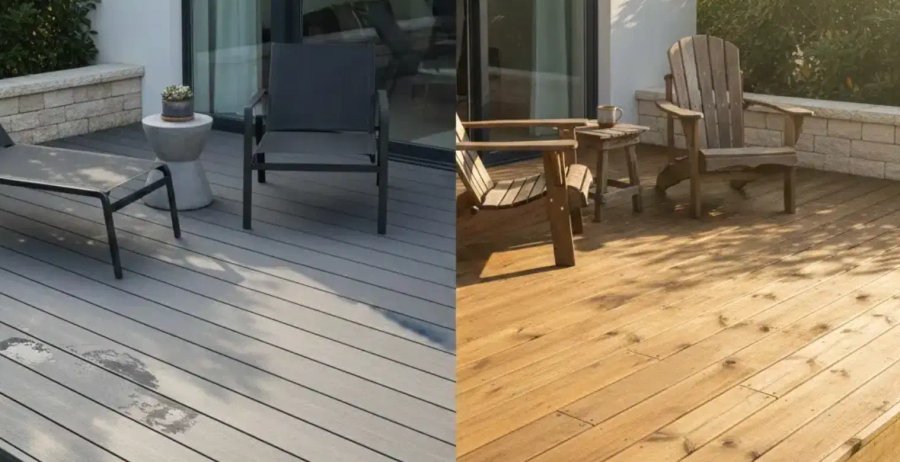
If you're planning to build a new deck in Alberta, one of the biggest decisions you'll make is choosing the right material. For most homeowners, it comes down to two options: traditional wood or modern composite decking.
Both have their advantages, and the right choice depends on your budget, how you use the deck, and how much maintenance you are happy to take on. Here is how we would break it down.
What's the Difference Between Composite and Wood Decking?
Wood decking is the traditional choice. It's typically made from pressure-treated lumber or cedar and offers a natural look that many homeowners prefer.
Composite decking is made from a blend of wood fibres and recycled plastics. It is designed to look like wood with a lot less maintenance.
At a glance:
- Wood decking: Natural, lower upfront cost, requires maintenance
- Composite decking: Higher upfront cost, low maintenance, longer lifespan
Is composite decking more expensive than wood?
Composite decking costs more at the start, but it is worth looking at what the deck costs you over the years. Since it does not need staining or sealing, and needs fewer repairs, the upkeep is a lot lower over time.
Wood decking is generally more affordable upfront. Pressure-treated wood is the most budget-friendly, and cedar sits a little higher.
In many cases, homeowners who plan to stay in their home long-term find that composite decking balances out the higher initial investment.
Durability in Alberta's Climate
Alberta's weather can be tough on outdoor structures. Between freezing winters, hot summers, and moisture from snow and rain, your deck needs to handle a wide range of conditions.
Wood decking can expand, contract, crack, and warp over time if not properly maintained. Moisture and UV exposure will gradually break down the material.
Composite decking is built to handle these conditions better. It resists moisture, fading, and temperature swings more than wood does.
How often does a wood deck need staining?
A wood deck needs staining or sealing every 1 to 2 years, while composite needs only an occasional wash with soap and water. Maintenance is one of the biggest differences between composite and wood decking.
Wood decks require regular upkeep, including:
- Staining or sealing every 1 to 2 years
- Cleaning to prevent mold and mildew
- Occasional repairs or board replacement
Composite decking is much lower maintenance. In most cases, it only requires:
- Occasional cleaning with soap and water
- No staining, sealing, or painting
For homeowners who want a deck they do not have to think about every season, composite is usually the one we would suggest.
Appearance and Style
Wood decking offers a natural, authentic look that many homeowners love. Each board has unique grain patterns, and materials like cedar can create a warm, high-end feel.
Composite decking has come a long way in recent years. Modern products are designed to closely resemble real wood and are available in a wide range of colours and finishes.
While some people still prefer the look of natural wood, others appreciate the consistency and variety that composite offers.
How long does a composite deck last compared to wood?
A well-maintained wood deck can last 10 to 20 years, depending on the material and level of upkeep.
Composite decking typically lasts 20 to 30 years or more with minimal maintenance. It's resistant to many of the issues that shorten the lifespan of wood, such as rot, insects, and moisture damage.
If you are thinking long-term, composite often works out to better value despite the higher upfront cost.
Which Option Is Better for Your Home?
There is no single right answer here (and we are happy to build either). It comes down to your priorities.
Choose wood decking if you:
- Want a lower upfront cost
- Prefer a natural, traditional look
- Don't mind regular maintenance
Choose composite decking if you:
- Want minimal maintenance
- Plan to stay in your home long-term
- Are looking for durability in Alberta's climate
Final Thoughts
Both composite and wood decking can be great options for Alberta homes when they are installed properly. It mostly comes down to your budget, how you use the deck, and how long you plan to stay.
If you are unsure which way to go, we are happy to come out, look at the site, and talk through both with you.
FAQs
Is composite decking worth the extra cost in Alberta? For many homeowners, yes. While the upfront cost is higher, composite decking requires very little maintenance and tends to last longer, which can make it more cost-effective over time.
Does wood decking hold up well in Alberta weather? It can, with regular maintenance. Without regular sealing and upkeep, wood is more likely to crack, warp, and take on moisture damage with Alberta's temperature swings.
Does composite decking get hot in the summer? Composite decking can get warm in direct sunlight - especially the darker colours. Many newer products are designed to absorb less heat than older ones.
Which option lasts longer, wood or composite? Composite decking generally lasts longer. Most composite decks can last 20 to 30 years or more, while wood decks typically last 10 to 20 years depending on maintenance.
Can composite decking look like real wood? Yes. Modern composite decking is designed to closely mimic the look of natural wood, with realistic grain patterns and a wide range of colour options.
Deck Building
Custom composite and wood decks built for Red Deer and Central Alberta.
See Our Deck Building Work →Before you sign a quote: What a complete deck quote includes
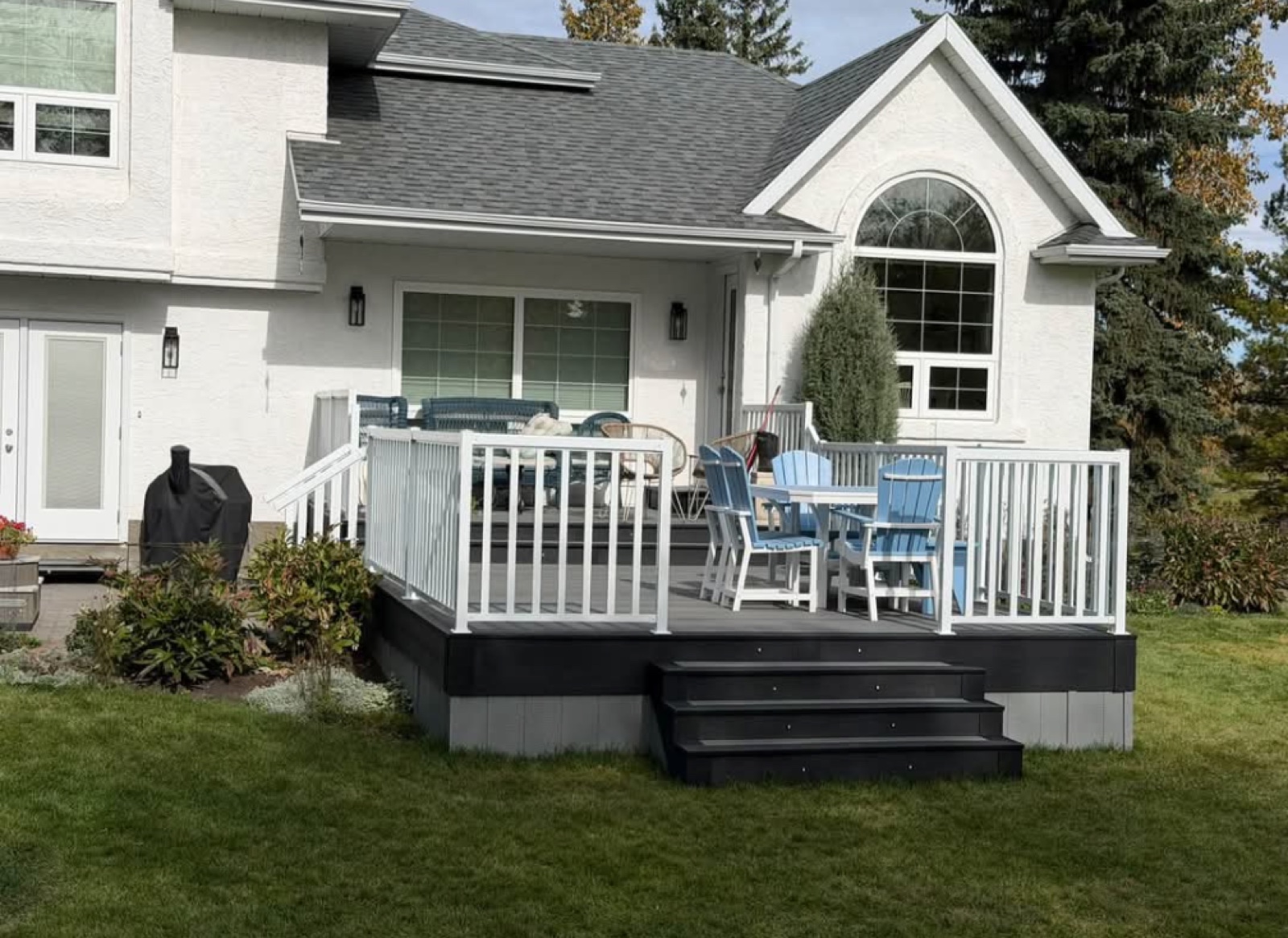
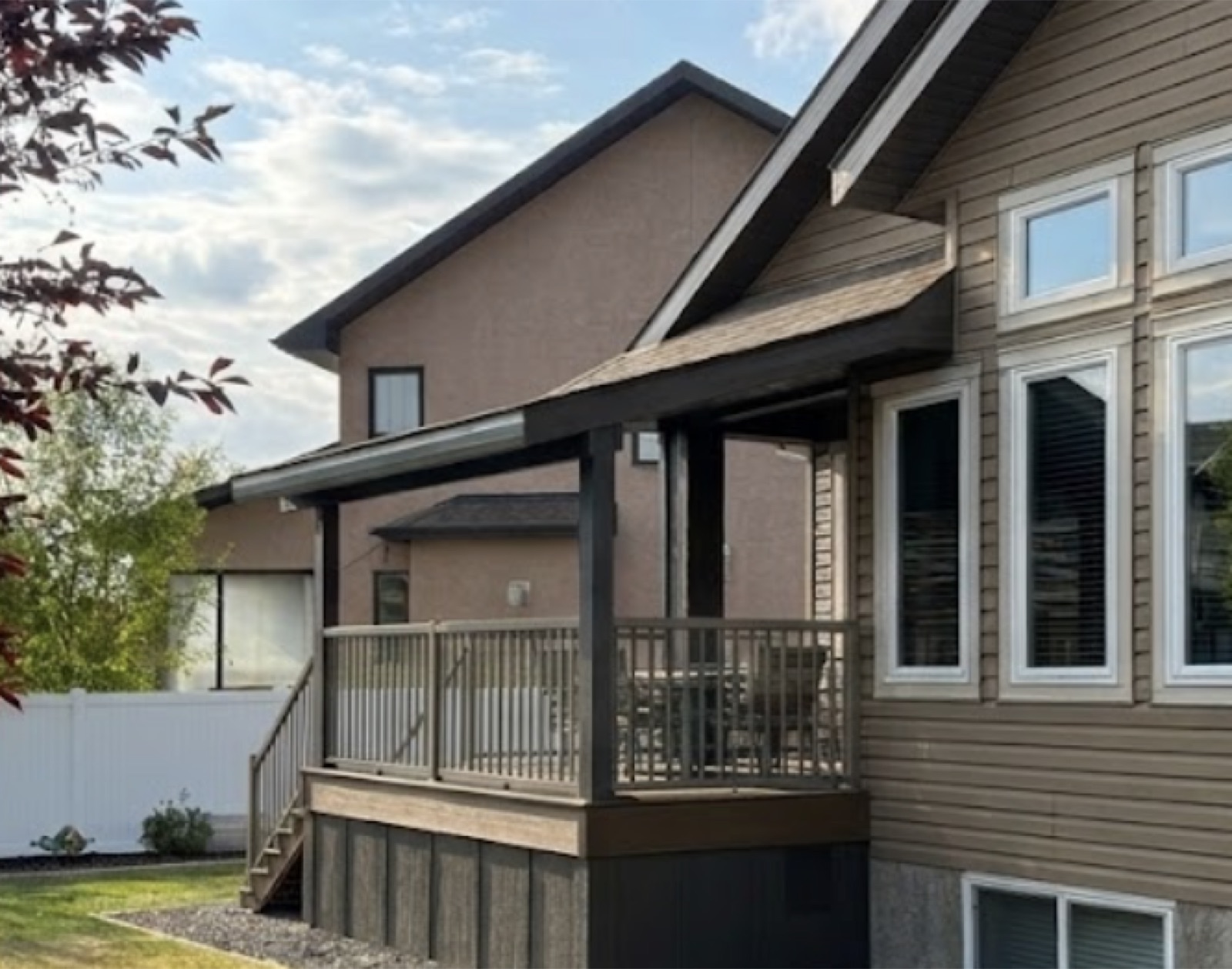
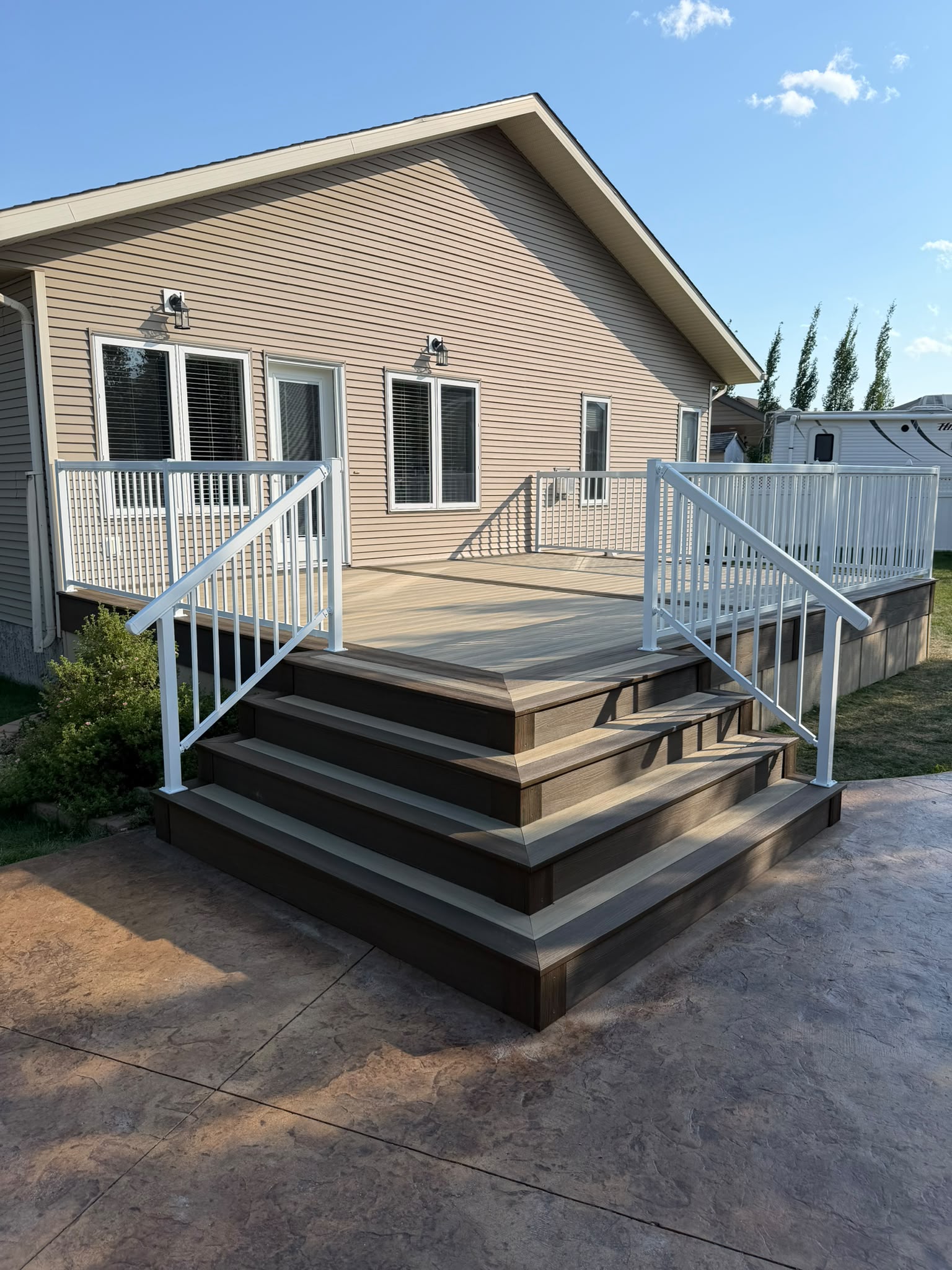
Ones we built
More from the Green Ladder Blog
David Hutten
Owner, Green Ladder Contractors
David Hutten started building at age 10 and has more than 30 years of hands-on construction experience. Green Ladder Contractors renovates kitchens, bathrooms and basements and builds home additions, garages and decks across Red Deer and Central Alberta.
Ready to start your project?
Book a free 15-minute discovery call. We'll walk through your vision, budget, and timeline.