
Composite vs Vinyl Decking: What Actually Lasts in Alberta
After an Alberta winter, most decks show their age. Here's a frank comparison of composite and vinyl decking, what holds up, what doesn't, and what we specify on every GL project.
By David Hutten, Owner, Green Ladder Contractors
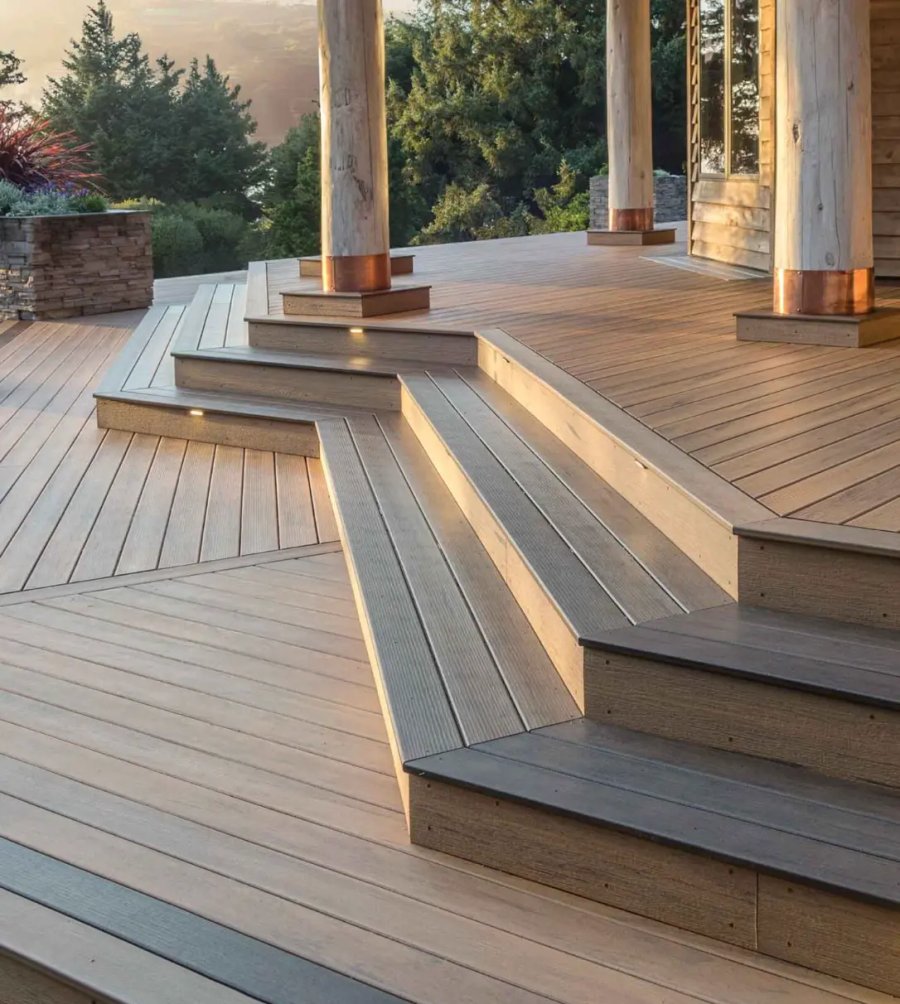
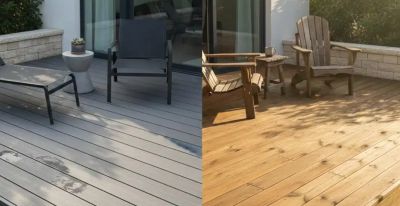
Every spring in Central Alberta, we get calls from homeowners who stained their deck last August and are looking at grey, cracking boards by May. The freeze-thaw cycle here is aggressive, and it exposes every weakness in a deck material fast.
If you've been researching low-maintenance decking, you've likely come across both composite and vinyl (PVC) options. The names are sometimes used interchangeably, but they're different products with meaningfully different performance characteristics. Here's what you actually need to know.
What's the Difference?
Composite decking is made from a blend of wood fiber and recycled plastic, typically with a protective polymer cap on all four sides. The wood content gives it a natural look and feel, while the cap protects against moisture, staining, and UV fading. Brands like TimberTech PRO and Trex Transcend use this construction.
Vinyl or PVC decking contains no wood at all. It's a full plastic board, typically cellular PVC, that is inherently moisture-proof. TimberTech's Advanced PVC line and TruNorth are examples of this category.
That distinction matters a lot in Alberta.
How Alberta's Climate Tests Both
Central Alberta sees temperature swings of 60°C or more between deep winter and peak summer. That's a lot of expansion and contraction. Both composite and PVC decking handle this better than wood, but they do it differently.
Capped composite boards are dimensionally stable in most conditions, but the wood fiber core can absorb some moisture over time if the cap is compromised, from an improperly driven screw, a cut end that isn't properly sealed, or a board that's allowed to sit in standing water. Once moisture gets into the core, freeze-thaw cycles do what they do.
PVC boards have no wood content, so there's nothing to absorb water. That makes them fully rot-proof in a way composite, which still has a wood-fiber core, isn't. For decks in wet exposures, a covered area that gets a lot of run-off, a north-facing deck that holds snow and ice longer, PVC has a clear edge.
Does PVC decking get hotter than composite?
The wood fibre in composite boards provides more thermal mass, which means they don't get as hot underfoot as pure PVC on a south-facing deck in July. TimberTech Advanced PVC uses a special formulation to reduce heat buildup, but in direct afternoon sun, a dark PVC board can get noticeably warmer than a dark composite.
For UV resistance, both categories have improved significantly. Well-capped composite and quality PVC products now carry 25-50 year fade warranties. The earlier generations of composite with inadequate caps were prone to fading, those products are essentially off the market now.
What About Appearance?
Composite decking generally looks more like natural wood. The wood fiber content creates subtle variation and a slightly softer texture that many homeowners prefer. Products like Eva-Last (which uses bamboo fiber rather than wood) produce an exceptionally realistic grain pattern that's difficult to distinguish from real hardwood at a glance.
PVC decking has improved dramatically, but it still tends to look slightly more uniform and plastic-like up close. This is partly intentional, the consistency is a feature for some buyers, but if authentic wood aesthetics matter to you, composite is the stronger choice.
What We Specify at GL
For most residential projects in Red Deer and Central Alberta, we specify capped composite, specifically TimberTech PRO, Eva-Last, or TruNorth depending on the application and budget.
- TimberTech PRO: Our most common specification. Excellent capping, wide colour range, proven performance in Canadian climates, 30-year fade and stain warranty.
- Eva-Last: For clients who want maximum density and durability. The bamboo core is harder than wood fiber and exceptionally resistant to freeze-thaw movement.
- TruNorth: Our recommendation for wet or shaded exposures. The rice hull core has virtually zero water absorption, and it's Canadian-made.
We recommend full PVC (TimberTech Advanced PVC) for specific applications: hot tub surrounds with constant moisture exposure, covered decks where UV fading is less of a concern, and situations where the client's primary requirement is absolute moisture resistance.
The Installation Side of the Equation
One thing that's often overlooked in the composite vs. vinyl comparison: both materials are significantly less forgiving of installation errors than pressure-treated wood. Composite and PVC have specific gapping requirements that vary by brand and temperature at time of installation. Install at -10°C with summer gaps and you'll have boards touching and potentially buckling by August. Install at +30°C with winter gaps and you'll have visible gaps all winter.
This is one of the main reasons manufacturer warranties often require installation by trained contractors, and why we take product-specific installation training seriously. The board choice matters. The installation matters just as much.
Bottom Line
For most Central Alberta decks: capped composite is the right call. It looks better, feels better underfoot, and performs excellently when installed correctly.
For specific high-moisture applications or where absolute rot-proofing is the priority: consider full PVC.
Either way, the manufacturer and the installer you choose matter more than the composite-vs-vinyl distinction. A properly installed mid-grade composite will outlast a poorly installed premium PVC.
Questions about which product makes sense for your deck? Contact Green Ladder Contractors and we'll walk you through the options for your specific yard, exposure, and budget.
Deck Building
Custom composite and wood decks built for Red Deer and Central Alberta.
See Our Deck Building Work →Before you sign a quote: What a complete deck quote includes
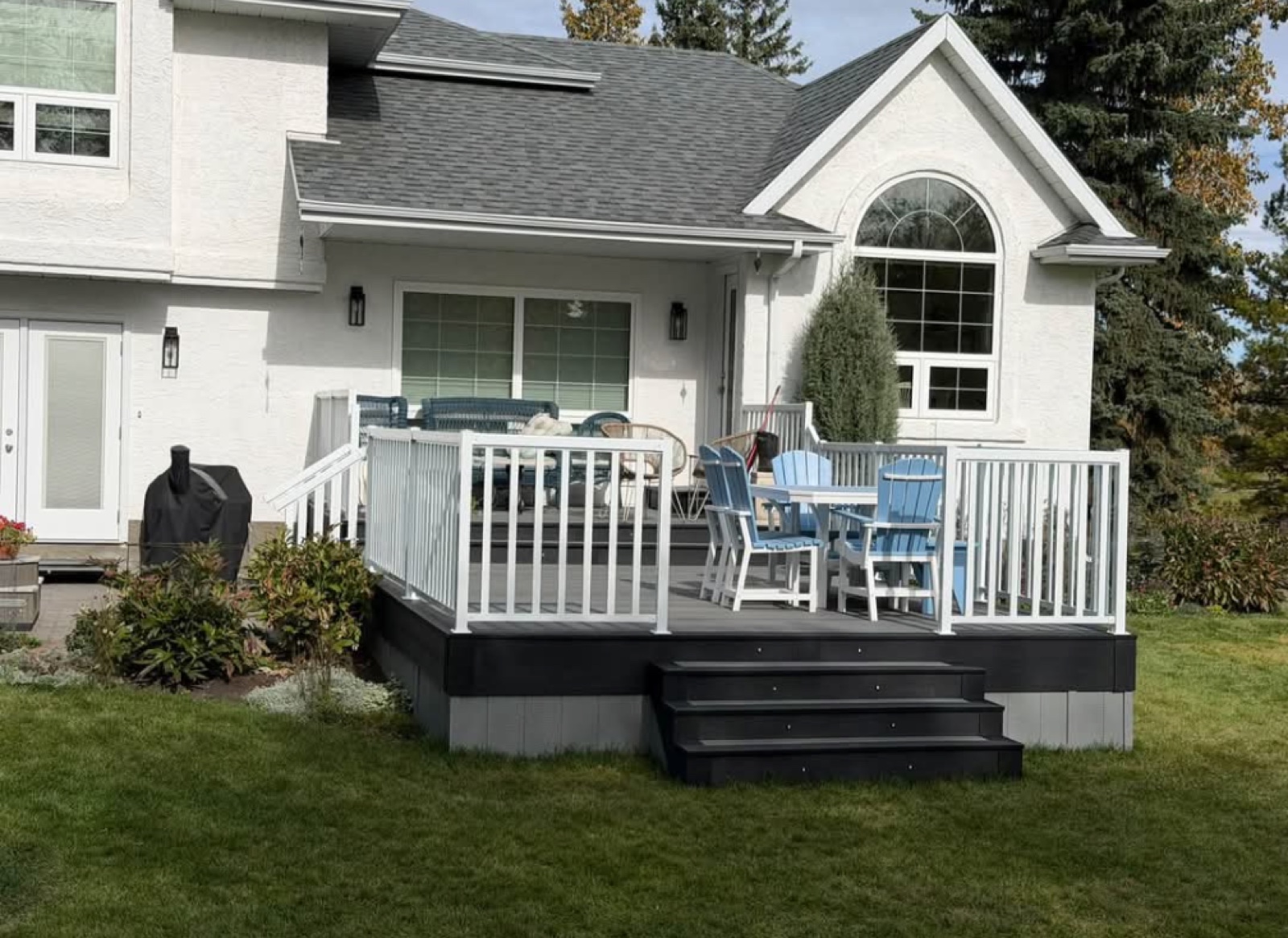
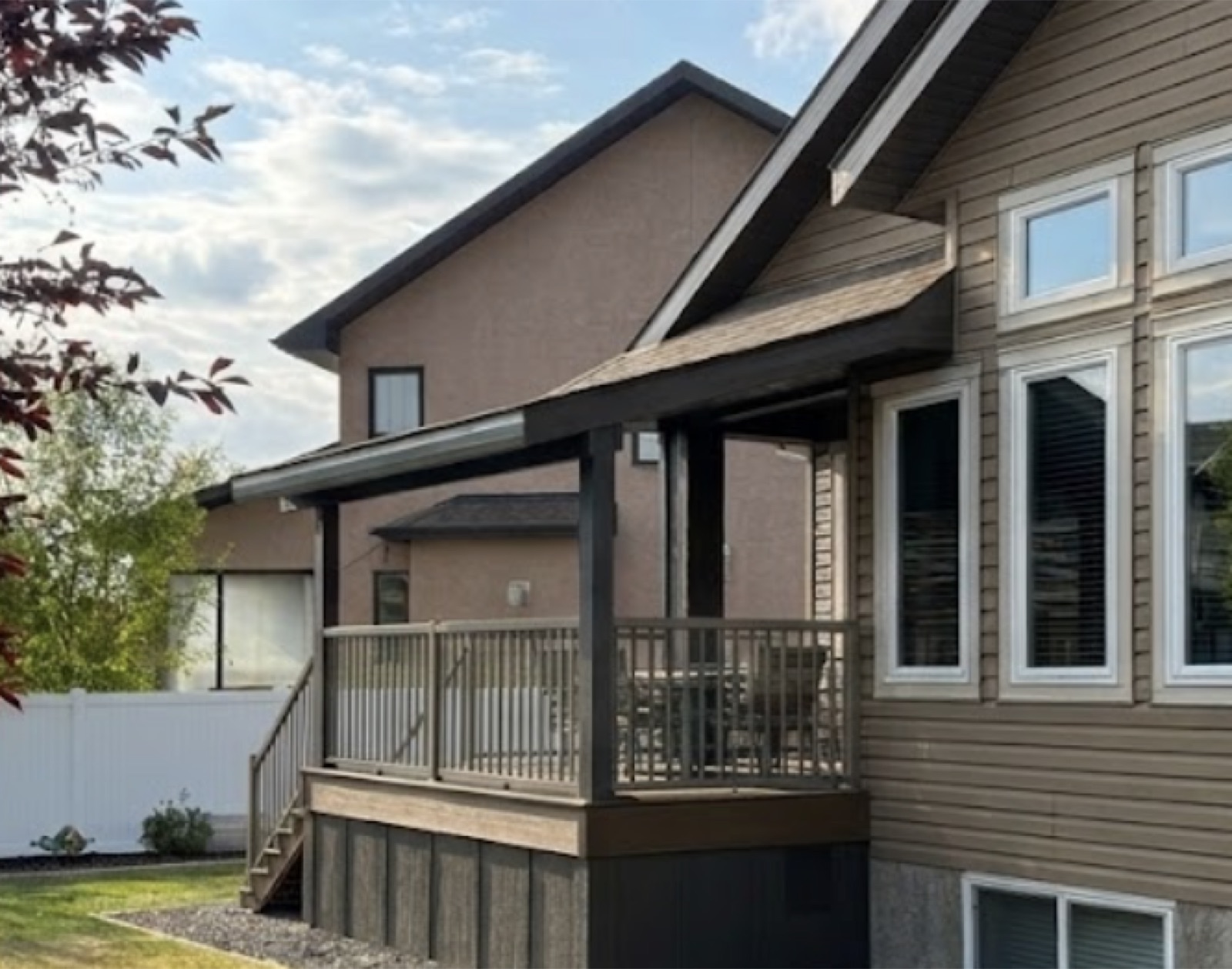
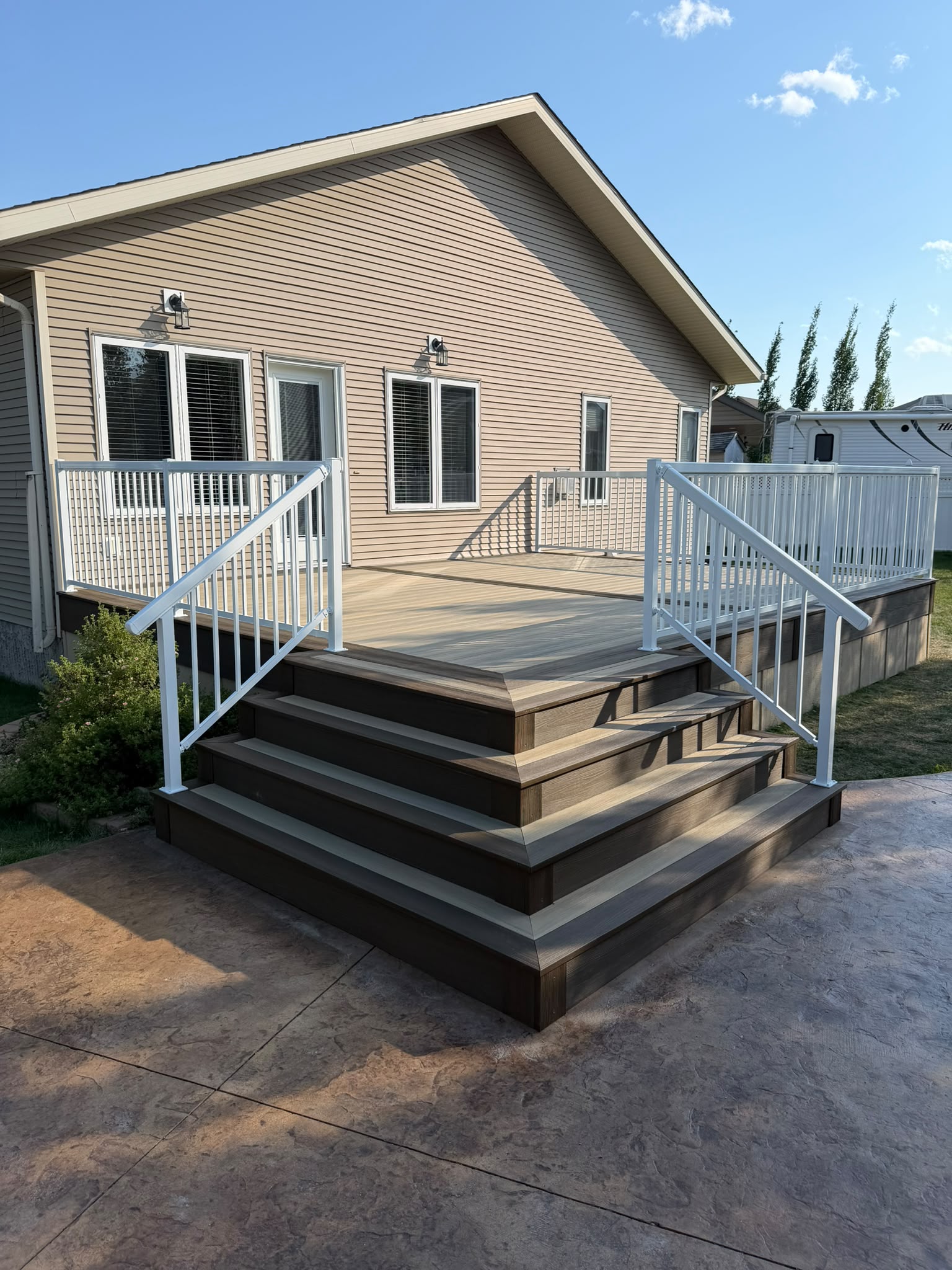
Ones we built
More from the Green Ladder Blog
David Hutten
Owner, Green Ladder Contractors
David Hutten started building at age 10 and has 25 years of hands-on construction experience. Green Ladder Contractors builds custom outdoor living spaces, decks, fences, pergolas, and landscaping, across Red Deer and Central Alberta.
Ready to start your project?
Book a free 15-minute discovery call. We'll walk through your vision, budget, and timeline.