
Gas vs Wood Outdoor Fireplace: Which is Right for an Alberta Backyard?
Gas outdoor fireplaces offer convenience and control. Wood-burning fireplaces offer the crackle and smell. Here's the honest comparison for Alberta homeowners, and what each actually involves to build.
By David Hutten, Owner, Green Ladder Contractors
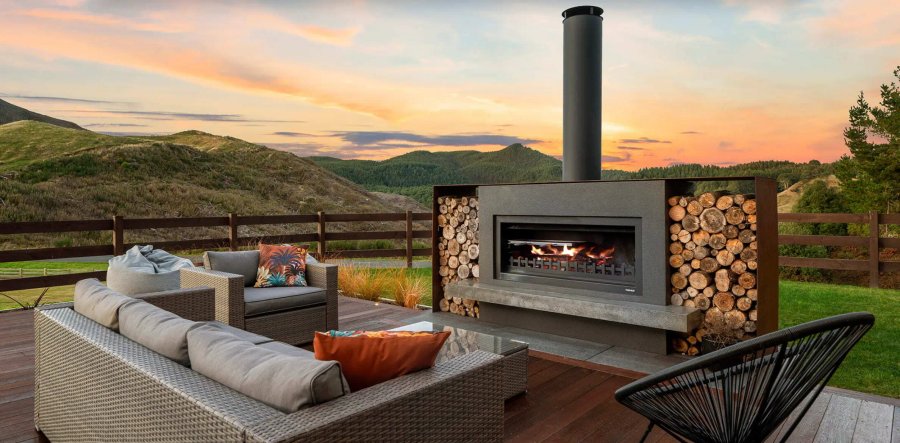
The fire feature question comes up on most full outdoor living projects. And the gas vs. wood decision is more involved than it looks. Both are excellent options. They're different products that suit different priorities. Here's the breakdown.
What you're actually choosing between
A gas outdoor fireplace or fire pit runs on natural gas or propane. Turn a valve, push a button, you have fire in seconds. Adjustable flame height. No smoke in unpredictable wind. No ash to clean. No wood to store. You can also turn it off completely in seconds.
A wood-burning outdoor fireplace produces real fire the way fire is supposed to be, unpredictable, crackling, fragrant, and imperfect. You build the fire, you tend it, and when you're done for the night there are embers to manage. It's a more involved experience, and for many people that's exactly the point.
The practical case for gas
Convenience is the primary argument. A gas fire feature is ready in seconds and off in seconds. For a family that uses the outdoor space frequently through the week, not just for intentional fire evenings but for everyday use, a gas feature gets lit more often because the barrier to use is nearly zero.
Smoke management is the second argument. In a covered outdoor structure, under a pergola or in a partially enclosed outdoor room, a wood-burning fireplace requires careful chimney design to manage smoke in wind conditions. A gas feature eliminates this concern entirely. If your fire feature is in a covered or semi-enclosed space, gas is significantly easier to design safely.
Gas features also have a smaller footprint. A gas fire pit insert set into a paver patio surround is a clean, integrated feature. A wood-burning fireplace requires a full masonry firebox, refractory lining, and chimney, a larger and more expensive structure.
The practical case for wood-burning
The experience is different and for many people it's irreplaceable. The smell of wood smoke, the sound of a crackling fire, the ritual of building and tending it, a gas fire feature doesn't replicate this. If the fire is part of the point, not just the light and warmth, wood matters.
Wood-burning fireplaces also work in a power outage and don't depend on a gas line. For acreage properties without natural gas service, a wood-burning fireplace may be the only practical masonry fire option (propane is an alternative for gas features on properties without natural gas).
A well-built outdoor wood-burning fireplace in natural stone is also a more permanent, substantial landscape feature. It has a presence and mass that a gas fire pit insert doesn't.
What each requires to build in Alberta
Gas fire features
Every gas fire feature in Alberta requires a permit and a licensed gas fitter for the line supply and appliance connection. This is a code requirement and a safety requirement, not something to work around. We include the licensed gas fitter quote as part of every gas fire feature project. The permit application, gas line rough-in, and appliance connection are all coordinated through our build process.
Gas line stub-up location needs to be planned before the patio or deck surface goes down. If you're adding a gas fire feature to an existing surface, the gas line needs to come up somewhere, and that somewhere needs to be designed, not improvised.
Wood-burning fireplaces
Wood-burning outdoor fireplaces require a masonry firebox, refractory lining rated for direct flame contact, and a chimney designed for your specific structure and wind conditions. The chimney height relative to adjacent roof lines and pergola structures is a code requirement, not just an aesthetic choice.
The foundation needs to carry the weight of the full masonry structure, significantly heavier than a gas fire pit. A reinforced concrete footing is standard. In Alberta, that footing goes below the frost line.
Is a gas fire feature cheaper than a wood-burning fireplace?
A gas fire feature generally costs less to build than a wood-burning fireplace. A gas fire pit in a paver surround is the least expensive of the three options below and a natural stone wood-burning fireplace is the most, with the gas line from the meter priced separately for the two gas options.
Gas fire pit insert in a paver patio surround: $3,000 to $12,000 depending on surround design and gas line distance.
Gas outdoor fireplace (masonry structure with gas insert): $12,000 to $30,000.
Wood-burning masonry outdoor fireplace in natural stone: $18,000 to $40,000+.
The gas line supply from your meter to the outdoor feature is typically $1,500 to $4,000 depending on distance and route, quoted by the licensed gas fitter.
Our recommendation
If you want a fire feature that gets used constantly with zero friction, something you light on a Tuesday evening without thinking, gas is the right choice. If the fire experience itself is what you're after and you're prepared to tend it, wood-burning delivers something gas can't replicate.
Many clients end up with both over time: a gas fire pit in the main patio for easy regular use, and a wood-burning fireplace as a more intentional feature elsewhere in the yard. If you're planning a fire feature for your Red Deer outdoor space, let's talk through what suits how you actually use your yard.
Outdoor Fireplaces
Custom outdoor fireplaces and fire features built for Red Deer backyards.
See Our Outdoor Fireplaces Work →More from the Green Ladder Blog
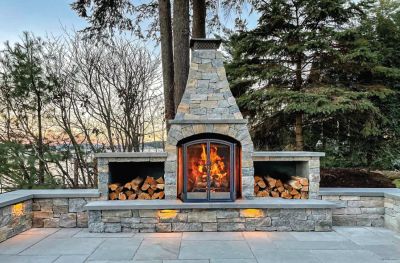 Pricing & Budgeting
Outdoor Fireplace Cost in Central Alberta: What to Budget
5 min read
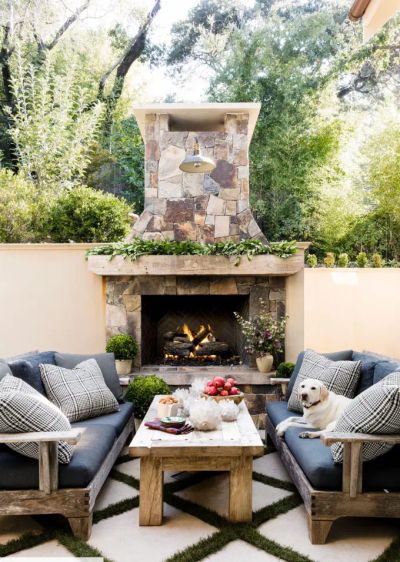 Build Guides
Building an Outdoor Fireplace in Red Deer: Permits, Site Requirements, and What to Budget
5 min read
 Materials & Products
Flagstone vs Interlocking Pavers: Which is Right for Your Alberta Backyard?
5 min read
David Hutten
Owner, Green Ladder Contractors
David Hutten started building at age 10 and has 25 years of hands-on construction experience. Green Ladder Contractors builds custom outdoor living spaces, decks, fences, pergolas, and landscaping, across Red Deer and Central Alberta.
Ready to start your project?
Book a free 15-minute discovery call. We'll walk through your vision, budget, and timeline.