
Trim and Finish Carpentry: The Details That Make a Renovation
Trim and finish carpentry in Red Deer and Central Alberta. See how baseboards, casing, and clean joints separate a good reno from a great one.
By David Hutten, Owner, Green Ladder Contractors
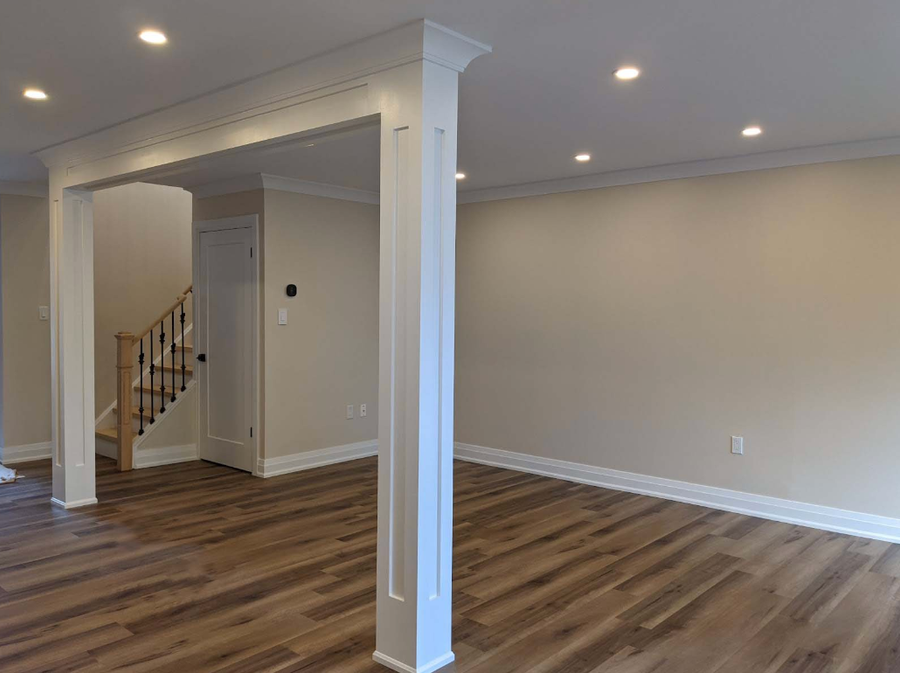
You can spend a fortune on a renovation and still have it look average if the finish carpentry is sloppy. Trim is the last thing installed and the first thing people notice. Gaps at the mitres, wavy reveals on door casing, baseboard that does not meet the floor, caulk lines you can see from across the room. Those small things are what your eye lands on, even when you cannot name why the room feels off.
Across Red Deer and Central Alberta we get called in to finish rooms other people boarded and painted, and the trim is usually where the shortcuts show. Good finish carpentry is slow, fussy work. It is also the part of a renovation that pays you back every single day you live in the space.
What finish carpentry actually covers
Finish carpentry is everything that goes on after the walls are boarded, taped, and primed. Baseboards. Door and window casing. Crown moulding. Wainscoting and panel walls. Built-in shelving and benches. Window sills and stools. Stair trim and handrails. Interior doors hung and adjusted so they latch clean and swing without dragging.
It sounds simple until you try to make two pieces of wood meet at a corner and stay tight through an Alberta winter.
Why the joints move, and how we deal with it
Here is a reality specific to our climate. Central Alberta winters pull indoor humidity way down, often into the low teens. Wood trim gives up moisture in that dry air and shrinks a little. Come summer, humidity climbs back up and the wood swells. That seasonal movement is exactly what opens up the tight mitre joints you were so proud of in the fall.
Good finish carpenters plan for that movement instead of pretending it does not happen. We let trim acclimate to the house before we cut it. We glue mitre joints so the two faces move as one piece instead of splitting apart. We fasten into solid framing, not just into drywall, so nothing works loose. On long baseboard runs we use proper scarf joints cut at an angle rather than butting two square ends together, because a scarf joint hides the seasonal gap where a butt joint shows it.
For trim and finish nailing we use finish and brad nails, which is exactly what that work calls for. Structural fastening is a different story: anything holding weight or framing gets screwed, not nailed.
The details that separate good from great
A few things we obsess over that most people never consciously notice:
Consistent reveals. The little step where casing sits back from the edge of a door jamb should be identical all the way around, top and both sides. When it wanders, the door looks crooked even when it is dead plumb.
Tight, glued mitres with no gap at the point. On a stained finish especially, there is no caulk to hide behind, so the cut has to be right the first time.
Scribing to the floor. Alberta floors are rarely dead level, especially in older Red Deer homes that have settled. Rather than leave a gap under the baseboard, we scribe it to follow the floor so it sits down tight the whole way.
Caulk used to finish, not to hide. A thin, clean caulk line at the wall keeps paint lines crisp. Caulk packed into a quarter-inch gap to cover a bad cut always cracks and falls out within a year.
Doors that work. A door that sticks, rubs the frame, or will not latch is a finish carpentry failure, not a door problem. We shim and set jambs plumb so the door does its job for the life of the house.
Where trim carpentry fits in a renovation budget
Trim is one of the highest-impact dollars in a whole renovation. Upgrading from builder-grade to taller baseboards, wider casing, or a panelled feature wall changes the feel of a room far more than the material cost suggests. Pricing depends on the trim profile, the linear footage, paint-grade versus stain-grade, and how straight and square the existing walls and floors are. We work all of that out at the in-home consultation and give you a real number rather than a guess.
FAQ
Should I choose paint-grade or stain-grade trim?
Paint-grade is more forgiving and less expensive, and mitres can be filled and painted. Stain-grade shows the wood grain and every joint, so it costs more in both material and labour because the cuts have to be flawless.
Will my mitre joints open up over the winter?
Some seasonal movement is normal in Central Alberta because indoor air gets so dry. We glue joints, acclimate the wood, and fasten into framing to keep that movement to a minimum so it stays tight.
Can you match existing trim in an older Red Deer home?
Usually, yes. We can source a close profile or have trim milled to match so a new room or addition blends with the rest of the house.
Do taller baseboards really make a difference?
A big one. Taller baseboard and wider casing read as a higher-end finish for a modest material upgrade, which is why it is one of the first things we suggest when a client wants more impact per dollar.
If your renovation deserves finish work that holds up, book an in-home consultation with Green Ladder in Red Deer. We will look at your space, talk through trim options, and give you a straight quote for carpentry done right.
Interior Renovations
Basement development, kitchen and bathroom remodels, and whole-home interior renovations across Red Deer and Central Alberta.
See Our Interior Renovations Work →Before you sign a quote: What a complete interior renovation quote includes
More from the Green Ladder Blog

David Hutten
Owner, Green Ladder Contractors
David Hutten started building at age 10 and has 25 years of hands-on construction experience. Green Ladder Contractors builds custom outdoor living spaces, decks, fences, pergolas, and landscaping, across Red Deer and Central Alberta.
Ready to start your project?
Book a free 15-minute discovery call. We'll walk through your vision, budget, and timeline.