
Bathroom Waterproofing Done Right: What Happens Behind the Tile
How proper bathroom waterproofing works behind the tile in Red Deer and Central Alberta homes: backer board, membranes, pre-slope, and sealed penetrations.
By David Hutten, Owner, Green Ladder Contractors
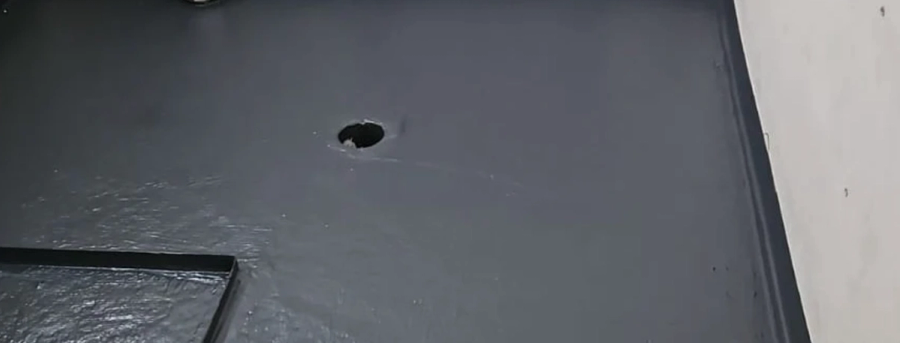
A tiled shower can look flawless and still be rotting the wall behind it. The tile and grout you see are not the waterproofing. Water gets through grout, it always has, and what stops that water from destroying your framing is a set of hidden layers most homeowners never see and never think about. Get those layers right and a shower lasts decades. Get them wrong and you are tearing it out in a few years with black mould and soft framing behind it.
In Red Deer and across Central Alberta we get called to gut bathrooms that failed early, and it is almost never the tile that failed. It is the stuff behind it. Here is what proper waterproofing actually involves so you know what you are paying for.
Grout is not waterproof
Start with the thing people get wrong. Grout is not a seal. It is porous, it lets moisture pass, and even a good sealer only slows that down. Water works its way through grout lines and reaches whatever is behind the tile. So the real question is never whether water gets back there. It does. The question is what it hits when it does, and whether that surface sheds it back to the drain or soaks it up.
Backer board, not drywall
The single most common failure we find is tile set over regular drywall or, worse, over green board that someone thought was good enough for a wet wall. Standard drywall in a shower is a countdown to failure. The paper facing feeds mould and the gypsum core turns to mush once it stays wet.
A proper shower gets a cement backer board or a foam tile backer board instead. That material does not rot and gives the waterproofing and tile a stable base. Green board and moisture-resistant drywall are fine outside the wet zone, on the ceiling or the outer bathroom walls, but not inside a shower or tub surround where water actually lands.
Waterproofing membranes: sheet and liquid
Backer board still needs a waterproofing layer over it, because cement board itself will pass water through to the framing. That layer is a membrane, and it comes two ways.
A sheet membrane is a fabric or bonded sheet that gets set into thinset over the backer board, with the seams and corners overlapped and sealed. It goes on as one continuous waterproof skin.
A liquid membrane is a paint-on or trowel-on coating, usually built up in two coats with reinforcing fabric at the corners and changes of plane. Done to the right thickness it forms the same continuous barrier.
Both work when they are installed properly and to full coverage. What matters is that every square inch of the wet wall is covered, the coats are thick enough, and the corners and seams are reinforced. Corners and changes of plane are where cheap jobs cut back, and corners are exactly where water wants to get through.
The shower pan and the pre-slope
The floor of a shower is where the most expensive mistakes hide. Water that gets through the tile floor has to be carried to the drain, and that only happens if the layer under the tile slopes toward the drain. That slope is called the pre-slope, and it has to be built into the pan below the waterproofing, not just faked with the tile on top.
Skip the pre-slope and water sits flat under the tile with nowhere to go. It pools, stays there, and eventually finds the framing. A modern approach uses a sloped foam pan with a bonded membrane and a matching drain, which builds the slope and the waterproofing into one system. Older mud-bed pans work too when the pre-slope is packed in correctly before anything else goes down. Either way, the water under the tile has to run downhill to the drain.
Sealing every penetration
Every spot where something pokes through the waterproofing is a potential leak: the shower valve, the tub spout, the shower arm, niches, benches, and grab bars. Each one has to be sealed to the membrane with the right sealant or a preformed seal so water cannot sneak in around it. A niche, that handy recessed shelf for shampoo, is a favourite failure point because it has more corners and seams than any other part of the shower. Built right, it is bulletproof. Built lazy, it leaks straight into the wall.
Why the hidden layers matter in Alberta
Here is the Central Alberta angle. When moisture gets into a wall and that wall goes through our freeze-thaw cycles, or sits against a cold exterior wall in a long winter, the damage compounds. Trapped moisture plus cold framing is how you grow mould and rot inside a wall that looks perfectly fine from the bathroom. You do not see it until you smell it or until the tile starts moving. That is why we do not cut corners on the parts nobody will ever photograph.
FAQ
Can you tile directly over drywall in a shower?
No. Inside the wet area you need cement or foam backer board plus a waterproofing membrane. Regular drywall behind shower tile is the most common reason showers fail early.
Is a sheet membrane better than a liquid one?
Both work well when installed correctly to full coverage with reinforced corners. The right choice depends on the shower layout and the tile system. What matters is complete, properly built coverage, not which type.
What is a pre-slope and why does it matter?
It is the slope built into the shower floor beneath the waterproofing so any water that gets through the tile runs to the drain instead of pooling. Without it, water sits under the tile and eventually reaches the framing.
How long should a properly waterproofed shower last?
Decades. Failures almost always come from skipped waterproofing steps, not from age. Done right, the hidden layers outlast the tile style you picked.
If you are planning a bathroom remodel and want it built to last, book an in-home consultation with Green Ladder in Red Deer. We will walk through the layout, explain the waterproofing system we would use, and give you a straight quote for a bathroom that holds up in Central Alberta.
Bathroom Renovations
Bathroom renovations and remodels in Red Deer and Central Alberta, with proper waterproofing behind the tile.
See Our Bathroom Renovations Work →Before you sign a quote: What a complete bathroom quote includes
Ones we built
More from the Green Ladder Blog
David Hutten
Owner, Green Ladder Contractors
David Hutten started building at age 10 and has 25 years of hands-on construction experience. Green Ladder Contractors builds custom outdoor living spaces, decks, fences, pergolas, and landscaping, across Red Deer and Central Alberta.
Ready to start your project?
Book a free 15-minute discovery call. We'll walk through your vision, budget, and timeline.