
Bathroom Ventilation and Moisture in Alberta Homes
How to size a bathroom fan, where the duct has to go, and why Alberta winters make a badly vented bathroom fail faster than anywhere else.
By David Hutten, Owner, Green Ladder Contractors
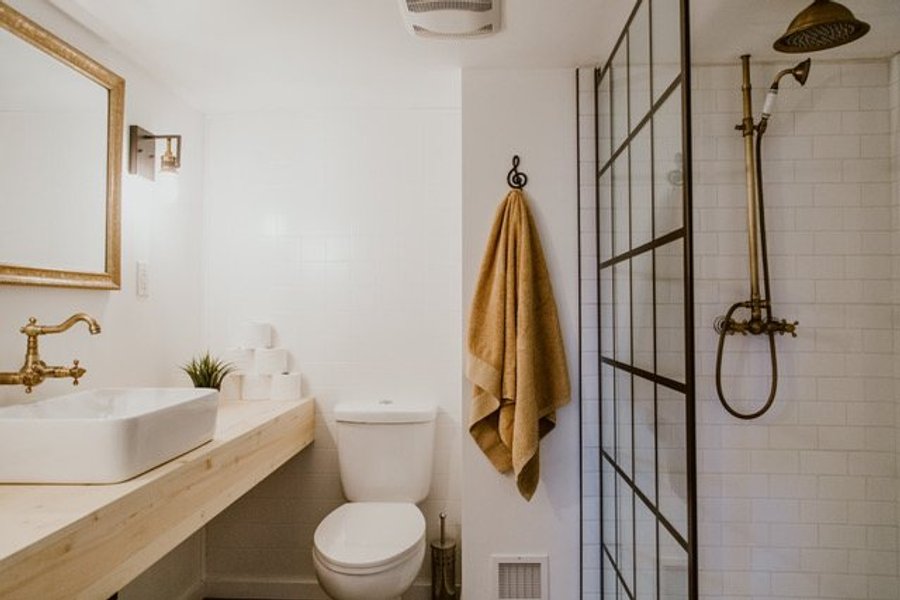
A bathroom can be beautifully built, perfectly waterproofed, and still fail. Peeling paint, black spotting at the ceiling corners, a door that swells every winter, mould in the caulk line that comes back a month after you clean it. That is almost never a leak. That is a ventilation problem, and in a cold climate it compounds faster than most people expect.
Why Alberta Is Harder
Warm moist air holds far more water than cold air. Every winter shower in a Red Deer home puts a large amount of moisture into air that is being pushed toward very cold surfaces: the ceiling below an attic that is at outdoor temperature, the exterior wall behind your vanity, the window in the shower.
When that air hits a cold surface it gives up its moisture as condensation. Do that twice a day for five months and you get mould on the drywall, rot in the framing you cannot see, and in bad cases frost accumulating in the attic that shows up as a mysterious ceiling stain in March when it melts.
The fix is not a dehumidifier. It is getting the moist air out of the house before it reaches a cold surface.
Sizing the Fan
The common rule is 1 CFM per square foot of floor area, with 50 CFM as the practical minimum for any bathroom.
So a 5' by 8' bathroom at 40 sqft takes a 50 CFM fan. An 8' x 10' at 80 sqft takes 80 CFM.
For a bathroom over about 100 sqft, or one with a separate enclosed toilet or a steam shower, size by fixture instead: roughly 50 CFM each for a toilet, shower or tub, and 100 CFM for a jetted tub. Add them up. A large ensuite frequently wants two fans, or one fan plus a dedicated one for the water closet, instead of a single large unit trying to pull from two rooms.
Two things people miss. First, the number on the box is measured in ideal conditions, and real duct runs with elbows deliver less, so do not size to the exact minimum. Second, a fan you can hear is a fan nobody runs. Look at the sone rating and aim for 1.0 or below in a bathroom people actually use (a Panasonic WhisperCeiling sits around 0.3, for reference). Quiet fans get used, and a fan that gets used is worth more than a powerful one that annoys everyone.
Where the Duct Goes
Outside. Always outside. Not into the attic, not into a soffit cavity, not into the space between floors. Venting a bathroom fan into an attic is the single worst ventilation mistake and we still find it regularly in Central Alberta homes, including relatively new ones.
Then, in this climate, three details matter:
Insulate the duct. An uninsulated metal duct running through a cold attic is a condenser. Warm wet air enters, water condenses on the inside, and it runs back down into the fan housing and drips through your ceiling. People call that a roof leak. It is condensation off their own shower, coming back down the duct.
Keep the run short and straight, and slope it slightly down toward the exterior so any condensate that does form drains out instead of back. Use smooth rigid duct where you can. Flexible duct kills airflow, and a sagging flex run creates a low spot that collects water.
Use a proper exterior hood with a damper. A damper stops cold air blowing back in and stops the duct becoming a highway for the outdoors. Check it occasionally in winter, because frost can hold a damper open or ice it shut.
Roof or wall termination both work. A wall vent is easier to reach and inspect. Whichever it is, it must not dump into a soffit, because the soffit is an intake and the air goes straight back into the attic.
Run Time Is the Other Half
A correctly sized fan that runs for three minutes does very little. The moisture is still in the room when it stops.
Run the fan for the shower and at least 20 minutes after. The easiest way to make that happen reliably is to take it off human memory: a timer switch, or better, a humidity sensing switch that turns the fan on when humidity rises and off once it drops. That is a small upgrade during a renovation and it solves the behaviour problem permanently, which no amount of asking people to remember will.
Keep the bathroom door open after a shower where you can. And if your bathroom has a window, resist using it as the ventilation strategy in January!
What to Do in an Existing Bathroom
If you have visible mould at the ceiling or in the corners, start by checking three things: whether the fan actually moves air, where the duct terminates, and how long it runs.
Testing airflow is easy. Hold a square of toilet paper against the grille with the fan running. If it does not hold, you have a problem, and it is often a disconnected duct in the attic instead of a dead fan.
Getting into the attic to see where it goes is worth doing once. A surprising number of the ventilation problems we are called about turn out to be a duct that came loose from its hood and has been blowing into the insulation for years.
Doing It During a Renovation
If you are already remodelling, this is the cheap moment. The ceiling is open, the wall is open, and adding a properly sized quiet fan on a humidity switch with insulated rigid duct to a real exterior hood is one of the smallest lines in the whole project. Retrofitting the same thing later means going back into a finished ceiling, which costs many times more than doing it while the ceiling is already open.
It is not the part of the bathroom anybody looks at. It is the part that decides whether the rest still looks good in eight years.
Bathroom Renovations
Bathroom renovations and remodels in Red Deer and Central Alberta, with proper waterproofing behind the tile.
See Our Bathroom Renovations Work →Before you sign a quote: What a complete bathroom quote includes
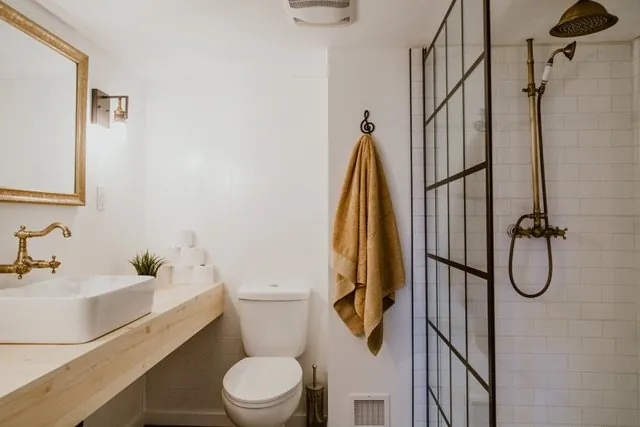
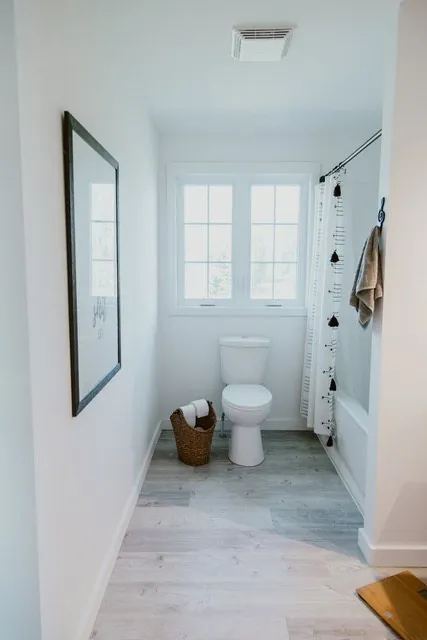
Ones we built
More from the Green Ladder Blog


David Hutten
Owner, Green Ladder Contractors
David Hutten started building at age 10 and has 25 years of hands-on construction experience. Green Ladder Contractors builds custom outdoor living spaces, decks, fences, pergolas, and landscaping, across Red Deer and Central Alberta.
Ready to start your project?
Book a free 15-minute discovery call. We'll walk through your vision, budget, and timeline.