
Do You Need a Permit for a Shed in Red Deer?
When a shed needs a permit in Red Deer and Central Alberta, what setbacks apply, and who is responsible for the application. Plain answers before you build.
By David Hutten, Owner, Green Ladder Contractors
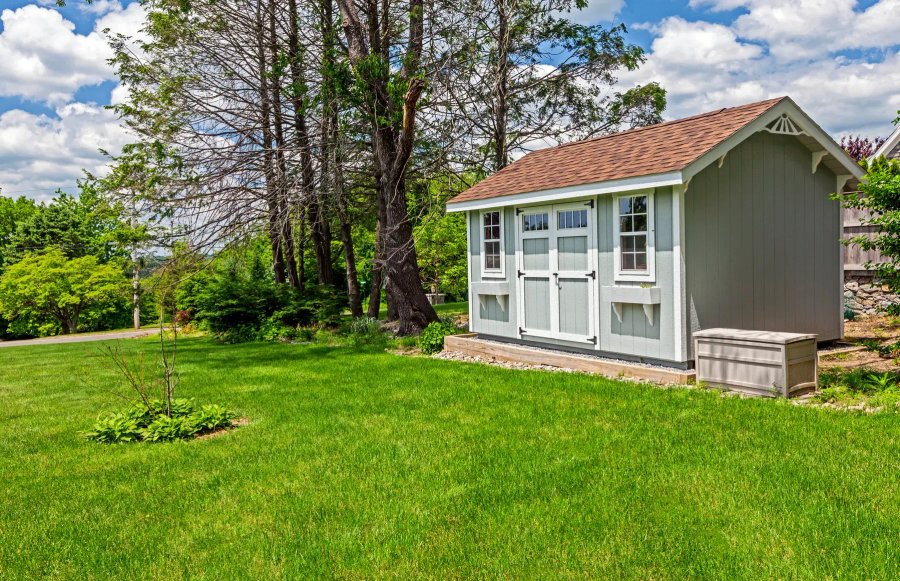
It depends on the size of the building and on the municipality, and the answer changes across Central Alberta. What does not change is that the rules exist whether or not anyone checks, and that a building in the wrong place is expensive to move.
Here is how to find out where your shed sits before anything gets framed.
The Two Different Permits
People use the word permit for two things that are not the same.
A development permit is about placement and land use. How close the building sits to the property line, how much of the yard is covered, how tall it is, and whether an accessory building is allowed there at all. Small sheds most often need this one, if anything.
A building permit is about the structure. Framing, foundation, and whether the building meets code. Sheds cross into this territory once they get past a certain floor area, and garages and shops are almost always on this side of the line.
A garden shed and a detached garage are the same trade and a completely different permit path. If you are weighing the two, that difference matters more than the price does.
Size Is the Usual Trigger
Most Alberta municipalities set a floor area threshold under which an accessory building does not need a building permit. Above it, one is required. The threshold is not the same everywhere, which is exactly why a number quoted in a blog post is not a substitute for asking your municipality.
What this means in practice is that the difference between a 10 by 10 and a 12 by 14 can be the difference between no building permit and a full application. Worth knowing before you settle on a size, because it may change what you want to build.
Setbacks Matter More Than People Expect
Setbacks are the required distances from your property lines, and they apply to sheds in essentially every municipality across Central Alberta whether or not a permit is needed.
The common problems:
Too close to the rear or side property line. The most frequent one. A shed tucked into a back corner is often exactly where the setback says it cannot go.
Built over an easement. Utility right-of-ways run through more back yards than people realise. Building over one can mean removing the building at your own cost if access is ever needed.
Too much lot coverage. There is usually a cap on the percentage of the yard that can be covered by buildings. A large shed plus an existing garage can exceed it.
Too close to the house. There is often a minimum separation between an accessory building and the dwelling.
None of these are difficult to satisfy. They are only difficult to satisfy after the building is standing.
Who Applies
In Alberta the homeowner is the applicant for work on their own home. The contractor does not pull the permit in your name. That is how the province structures it.
What a contractor should do is carry the load. Green Ladder gives you the 3D design and the footing details so your application has what it needs, and makes sure the work is ready when the inspector comes. You are the applicant on paper. You are not the one working out the paperwork.
What Happens If You Skip It
Nothing, usually, right up until it matters.
The moments it matters are selling the house, making an insurance claim, or a neighbour raising it with the municipality. An unpermitted accessory building can hold up a sale, get flagged on a real property report, or have to be moved or removed. A real property report with compliance is a normal part of a residential sale in Alberta, and a shed sitting inside a setback shows up on it.
That last one catches people. The building has been there for eight years, nobody ever said anything, and then it turns up on a survey during a sale.
The Practical Order of Operations
- Call your municipality with the footprint you have in mind and ask which permits apply at that size.
- Ask what the setbacks are for an accessory building on your lot.
- Check your real property report or title for easements and right-of-ways.
- Settle the size and placement.
- Then build.
Steps one through three take an afternoon. Moving a finished building takes considerably longer.
A Note on Central Alberta Specifically
Requirements vary between Red Deer, Lacombe, Sylvan Lake, Blackfalds, Innisfail, Ponoka, Olds, and the surrounding counties. Acreages and county land often have different rules again, sometimes more permissive on size and stricter on placement relative to services and septic.
Green Ladder builds sheds throughout this area and we tell you which side of the line your project sits on before you spend money on drawings. If the size you want triggers a building permit and the size just under it does not, that is worth knowing at the start rather than at the end.
Custom Sheds
Site-built storage sheds, workshops, and studios across Red Deer and Central Alberta.
See Our Custom Sheds Work →More from the Green Ladder Blog
David Hutten
Owner, Green Ladder Contractors
David Hutten started building at age 10 and has 25 years of hands-on construction experience. Green Ladder Contractors builds custom outdoor living spaces, decks, fences, pergolas, and landscaping, across Red Deer and Central Alberta.
Ready to start your project?
Book a free 15-minute discovery call. We'll walk through your vision, budget, and timeline.