
MDF vs Plywood Cabinet Boxes: Where It Matters
The cabinet box is the part you never see and never replace. Where MDF is fine, where plywood earns its cost, and the one place it really matters.
By David Hutten, Owner, Green Ladder Contractors
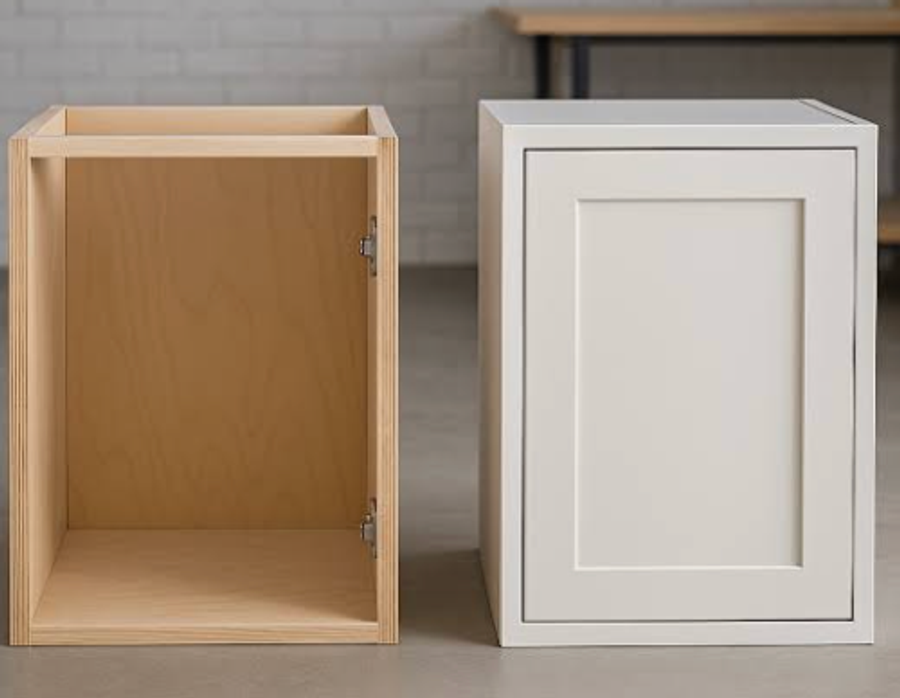
Doors get all the attention because doors are what you look at. The box behind them is what holds the kitchen up, carries the counter, and stays in the house long after somebody repaints the doors. It is worth understanding what you are buying.
What these materials actually are
Plywood is thin layers of wood veneer glued with the grain running in alternating directions. That cross graining is why it holds a screw well and resists sagging.
MDF is medium density fibreboard: wood fibre and resin pressed into a dense uniform panel. It is flat, stable, and it has no grain at all, which is exactly why painted doors are often MDF.
Particle board is a third material and it is not the same as MDF. It is coarser chips pressed together, it is lighter, and it holds fasteners considerably less well. A lot of what gets described loosely as MDF in a quote is actually melamine coated particle board. Ask which one (most quotes just say board and leave it there).
Is MDF ever better than plywood?
On a painted door or a painted panel, MDF is better than plywood. It has no grain to telegraph through the paint and no seasonal movement to open a joint. A painted MDF shaker door will stay flatter through an Alberta winter than a painted wood one.
For cabinet interiors and shelving in a dry area, a well made melamine faced panel is perfectly serviceable and it wipes clean.
Where is plywood worth the extra cost?
Plywood earns its cost in two places, under the sink and on long unsupported spans, and the first one is the important one.
Under the sink. This is the single wettest cabinet in the house and it is the one that fails. A slow supply line drip or a leaking drain will swell particle board and MDF quickly, and swollen board does not go back. Plywood gets wet and dries out. If you do nothing else, get a plywood box under the sink, and ask for a waterproof pan or a sealed bottom in that cabinet.
The second is long unsupported spans. A wide cabinet or a long shelf carrying dishes will sag over years, and the heavier the load and the longer the span, the more plywood pulls ahead. Anything over about 30" of unsupported shelf is worth thinking about, in any material.
Weight, and why it matters for uppers
Plywood boxes are lighter than particle board boxes of the same size. For wall cabinets, that reduces what is hanging off your wall framing, which matters more in an older house where you are relying on whatever studs are actually there.
Either way, upper cabinets get screwed into studs through a proper hanging rail, not into drywall with anchors. That is an install question more than a material one, and it is worth confirming.
Edges and how the box is joined
The exposed edges of an MDF or particle board panel are the vulnerable part. Edge banding covers them and keeps moisture out, and a thicker banding lasts longer than a thin one that lifts at the corner.
How the box is put together matters as much as what it is made of. Dowelled and glued joints or dadoed construction hold up. Boxes assembled with cam locks and screws only are quicker to build and looser over time. A well built particle board box beats a badly built plywood one, which is why the construction method belongs in the quote.
The Alberta angle
Our indoor air swings from humid in summer to very dry in winter, and that cycle is hard on anything that moves. MDF and particle board are dimensionally stable through that swing, which is a real advantage. What they do not tolerate is liquid water.
So the honest summary for a Central Alberta kitchen is that humidity is not the problem. Plumbing is. Spend the money on the boxes that live near water.
Should cabinet boxes be MDF or plywood?
Plywood boxes throughout if you want the most durable kitchen and the budget allows it. A mixed approach is entirely reasonable and it is what a lot of good kitchens are: plywood under the sink and anywhere near plumbing, quality melamine or MDF boxes elsewhere, painted MDF doors.
What is not reasonable is a quote that does not say. Cabinet boxes are the part of the kitchen nobody looks at and nobody replaces, and the difference between materials will not show for five years.
What to ask for in the quote
The box material named specifically, and whether MDF means MDF or means melamine coated particle board. The material of the sink base specifically. Panel thickness. How the boxes are joined. Edge banding thickness. Shelf thickness and whether shelves are adjustable. Drawer box construction, which is a separate question from cabinet box construction.
Kitchen Renovations
Full kitchen renovations in Red Deer and Central Alberta, managed from demolition to the final fixture.
See Our Kitchen Renovations Work →Before you sign a quote: What a complete kitchen quote includes
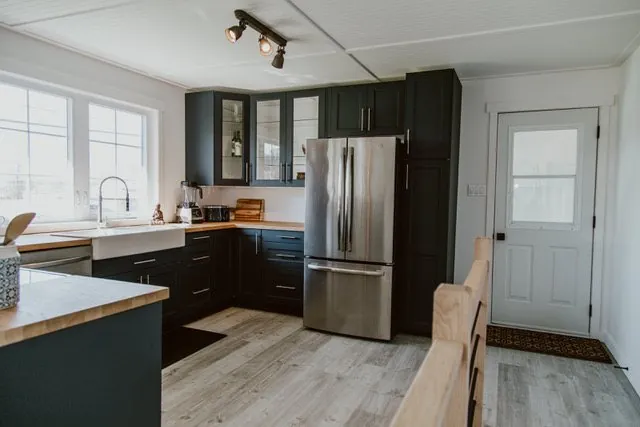
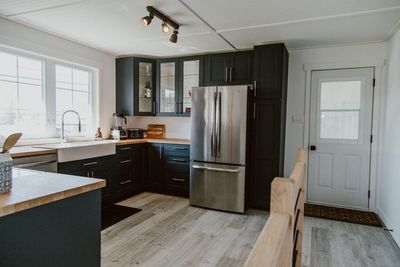
One we built
More from the Green Ladder Blog
David Hutten
Owner, Green Ladder Contractors
David Hutten started building at age 10 and has 25 years of hands-on construction experience. Green Ladder Contractors builds custom outdoor living spaces, decks, fences, pergolas, and landscaping, across Red Deer and Central Alberta.
Ready to start your project?
Book a free 15-minute discovery call. We'll walk through your vision, budget, and timeline.