
Painted vs Stained Cabinets: Which Holds Up Better?
Paint and stain wear differently, show damage differently, and age differently. What each one does over ten years in a working kitchen.
By David Hutten, Owner, Green Ladder Contractors
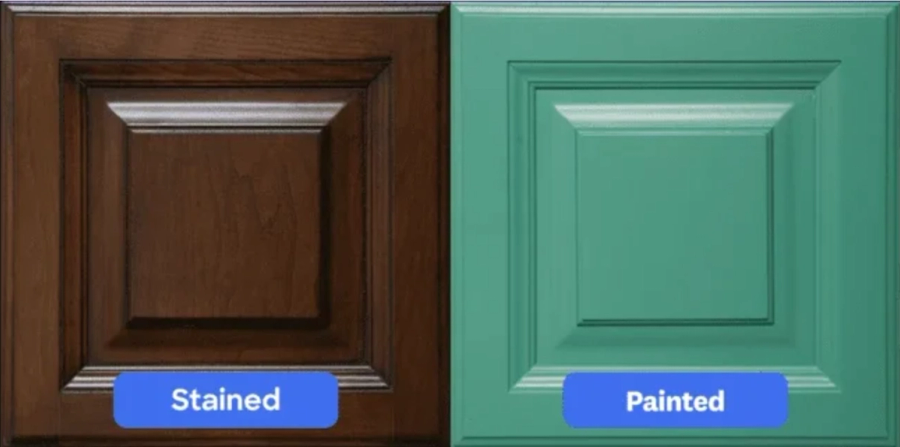
Painted cabinets have been the default in new kitchens for a while now. Stain never went away, and in a lot of Central Alberta homes it is the better answer. The choice is less about taste than most people expect, because the two finishes fail in completely different ways.
Paint sits on top. Stain goes in
Paint is a film over the wood. It hides the grain, it can be any colour, and it gives you the flat uniform look that reads as current.
Stain soaks into the wood and a clear topcoat protects it. The grain stays visible, which means the wood species matters enormously. Oak reads as oak. Maple takes stain unevenly unless it is conditioned first, which is why a lot of stained maple looks blotchy.
Do painted cabinets chip more than stained ones?
Paint chips. When it chips, you see raw wood or primer underneath in a colour that does not match, and the eye goes straight to it. The high wear spots are predictable: the edge beside the garbage pull out, the door under the sink, the corner of the island where people squeeze past (it is always those three).
Stain wears. It does not chip the same way, because there is no film to break off. It thins at the touch points and darkens where hands go, and it does that gradually enough that you often do not notice for years. On a busy family kitchen that difference is real.
Why do painted cabinet doors crack at the joints in winter?
A five piece cabinet door is a frame around a centre panel, and the panel is meant to float so it can move with humidity. In an Alberta winter, indoor air can get very dry, and that panel shrinks.
On a painted door, that shrinkage pulls a hairline of unpainted wood into view around the panel edge. It is not a defect and it is not a failure of the paint. It is the door doing exactly what it was built to do. But on a dark painted door it is visible, and people call about it every February.
On a stained door the same movement is nearly invisible, because the wood behind the joint is the same colour as the wood in front of it. If you are choosing a painted shaker door for a dry house, a slab door or a mitred door avoids the issue entirely.
Touching up
A painted chip can be filled and touched up, and if the colour is a standard one you can keep a small can for exactly that. The touch up will usually be slightly visible in raking light because the sheen never quite matches.
Stain is harder to touch up convincingly, because you are matching a colour that is partly the wood underneath. On the other hand it needs it less often.
Refinishing later
Going from stain to paint is straightforward. The doors get cleaned, deglossed, primed and sprayed, and the grain will still telegraph slightly through the paint on an open grained wood like oak. Some people like that.
Going from paint to stain is not really a thing. Stripping paint out of the grain and the corners of a profiled door is more work than the doors are worth. Treat the choice of paint as fairly permanent for the life of those doors.
Sprayed, not brushed
Whichever you choose, the finish quality comes from how it was applied. Cabinet doors should be sprayed, not brushed or rolled, and they should be sprayed off the box with the hardware removed. Brush marks on a cabinet door are the thing you see every day for the next fifteen years.
A conversion varnish or a catalysed finish is meaningfully more durable than a standard latex, and that is worth asking about by name.
Which one
Paint if you want a specific colour, a clean uniform look, and you are willing to touch up chips. Stain if the kitchen takes hard daily use, if you like visible grain, or if the house runs very dry in winter and you would rather not watch a panel line open up.
There is a middle answer that a lot of Central Alberta kitchens land on: painted uppers and perimeter, stained island. It gives you the bright look on the wall cabinets and puts the harder wearing finish where the traffic is.
What to ask for in the quote
The door style and the species. Whether doors are sprayed off site with hardware removed. The finish product by name and the number of coats. Whether the interiors of the boxes are finished to match or left as manufactured. If it is a refinish rather than new doors, whether the existing boxes are being finished at the same time, because a new door on an old box is a colour mismatch you cannot unsee.
Kitchen Renovations
Full kitchen renovations in Red Deer and Central Alberta, managed from demolition to the final fixture.
See Our Kitchen Renovations Work →Before you sign a quote: What a complete kitchen quote includes
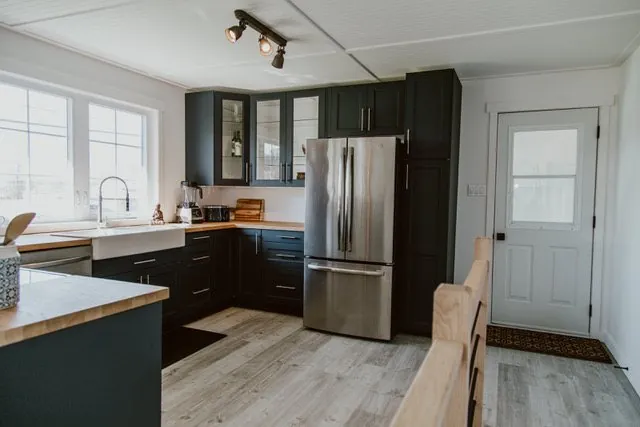
One we built
More from the Green Ladder Blog

David Hutten
Owner, Green Ladder Contractors
David Hutten started building at age 10 and has 25 years of hands-on construction experience. Green Ladder Contractors builds custom outdoor living spaces, decks, fences, pergolas, and landscaping, across Red Deer and Central Alberta.
Ready to start your project?
Book a free 15-minute discovery call. We'll walk through your vision, budget, and timeline.