
Quartz vs Granite Countertops for Alberta Kitchens
How quartz and granite actually differ on maintenance, seams, heat and daily wear, and which one suits a Central Alberta kitchen.
By David Hutten, Owner, Green Ladder Contractors
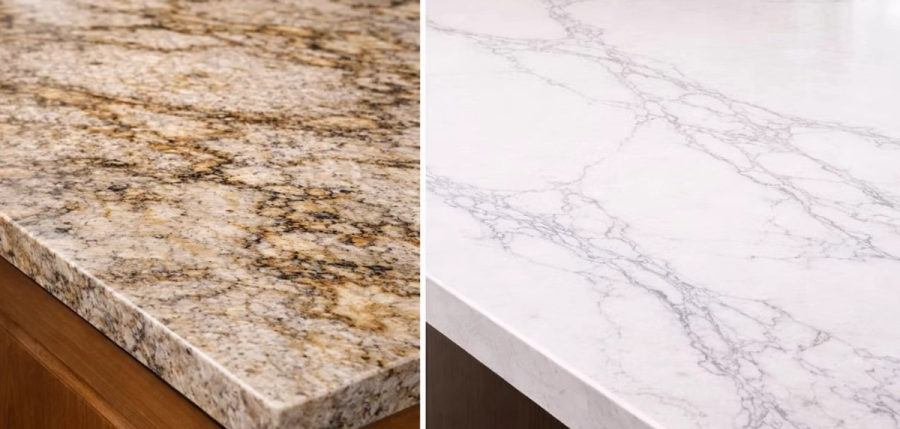
Countertops are the surface you touch more than anything else in the house, and the choice between quartz and granite gets made on the showroom floor under lights that flatter both. Here is how they behave once they are in a kitchen somebody actually cooks in.
They are not the same kind of material
Granite is quarried stone, cut into slabs. Every slab is a one off, which is both the appeal and the catch. The piece you approve is the piece you get, and the veining will not match the sample chip exactly.
Quartz is engineered. Roughly 90 percent ground natural quartz bound with resin and pigment, pressed into slabs. That is why quartz is consistent from slab to slab, and why a quartz kitchen looks like the sample.
Do quartz and granite countertops need sealing?
Granite is porous. It gets sealed, and the seal is maintenance. How often depends on the specific stone, because a dense dark granite behaves very differently from a light open one. The test is simple enough to do yourself: leave a small pool of water on it for fifteen minutes (a splash by the sink is plenty) and see whether the stone darkens underneath. If it does, it is ready to be sealed again.
Quartz is non porous. Nothing to seal, ever. For a kitchen with young kids, red wine and turmeric, that one property decides it for a lot of people.
Can you put a hot pan on quartz or granite?
Granite handles heat well. A hot pot straight off the element is not going to hurt it.
Quartz does not, and this is the failure we see most. The resin binding it will scorch and can discolour permanently, and manufacturers are specific about it. A trivet is not a suggestion on a quartz counter. If you are the kind of cook who moves a cast iron pan straight from the stove to the counter, that habit is worth thinking about before you choose.
Seams, and where they land
Both materials come in slabs, so both have seams on any run longer than the slab. What matters is where the seam falls and how well it is planned. A seam over a dishwasher opening is unsupported. A seam in the middle of a sink cutout is a weak point in the one place that gets constant water.
This is a layout conversation, not a material one, and it happens before anything is cut. Ask to see the slab layout drawing with the seams marked. Any fabricator worth using will produce one.
Templating happens after the cabinets go in
Neither material gets cut from the drawing. The counter is templated off the cabinets once they are installed and levelled, because the finished top has to match the room that is actually there rather than the one on paper.
That is why there is a gap in the middle of a kitchen schedule that looks like nothing is happening. It is the right way round, and shortening it is how you end up with a counter that does not sit flat.
The Alberta angle nobody mentions
Our winter indoor air is dry. Very dry. That does not hurt either material directly, but it does move the cabinets underneath them, and a counter is only as flat as what it sits on. Cabinet boxes that were installed shimmed and levelled will stay put. Boxes set on an uneven floor and pulled tight with screws will not.
It is also worth saying that a south facing kitchen in Alberta gets strong summer light. Some coloured quartz can fade over years of direct sun. Granite does not. If your counter runs under a big south window, ask the manufacturer directly about UV.
Quartz or granite: which suits your kitchen?
Choose quartz if you want a consistent look, no sealing, and a surface that shrugs off staining. Choose granite if you want a one off piece of stone, you put hot pans down without thinking, or you have a strong preference for natural material.
Neither is the upgrade over the other. They are different trade offs, and the one that suits you depends on how you cook more than on how the slab looks in a showroom.
What to ask for in the quote
The product by name, including the line and the colour, because those change the cost inside a single brand. The edge profile. The slab layout with seams marked. Whether the sink cutout, the faucet holes and any cooktop cutout are included. Whether templating and installation are in the number or separate.
If you are weighing a kitchen renovation in Red Deer or Central Alberta, we quote firm after we have walked the space with you. Every kitchen starts from a different place and the counter is one decision inside a much larger sequence.
Kitchen Renovations
Full kitchen renovations in Red Deer and Central Alberta, managed from demolition to the final fixture.
See Our Kitchen Renovations Work →Before you sign a quote: What a complete kitchen quote includes
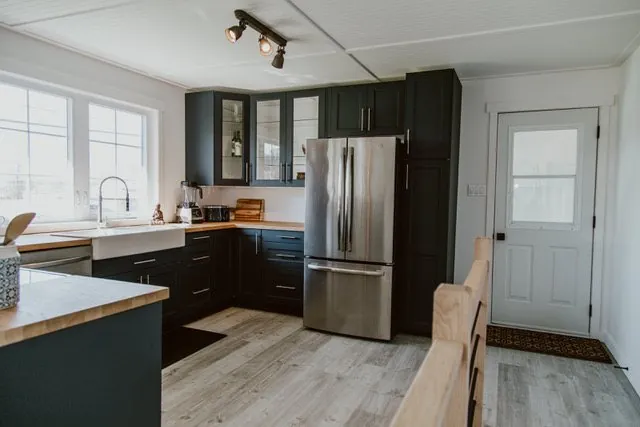
One we built
More from the Green Ladder Blog
David Hutten
Owner, Green Ladder Contractors
David Hutten started building at age 10 and has 25 years of hands-on construction experience. Green Ladder Contractors builds custom outdoor living spaces, decks, fences, pergolas, and landscaping, across Red Deer and Central Alberta.
Ready to start your project?
Book a free 15-minute discovery call. We'll walk through your vision, budget, and timeline.