
Best Flooring for Basements in Alberta (Moisture and Cold)
The best basement flooring for Red Deer and Central Alberta homes, ranked for moisture and cold, plus subfloor tips and what to avoid over concrete.
By David Hutten, Owner, Green Ladder Contractors
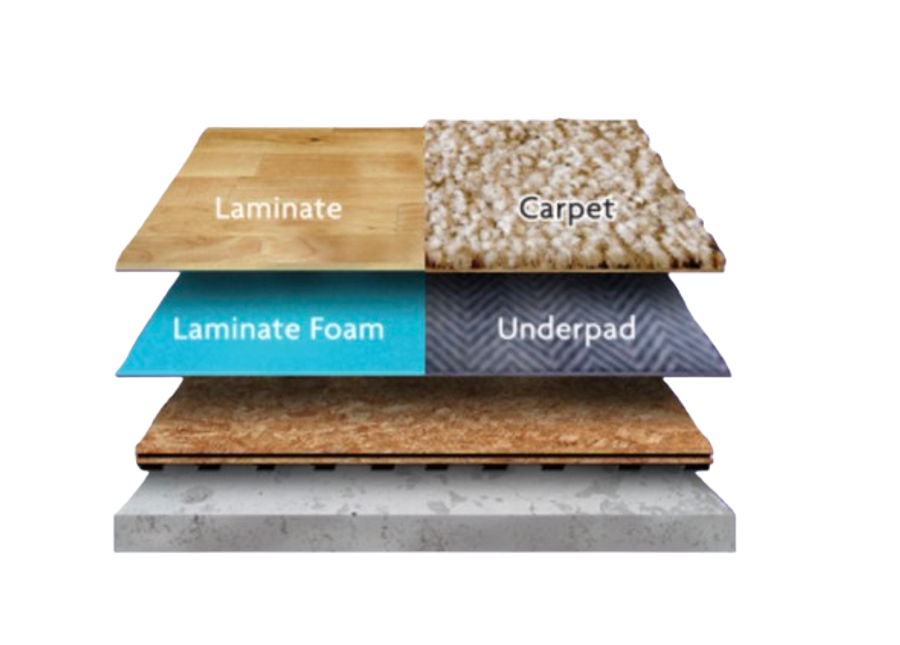
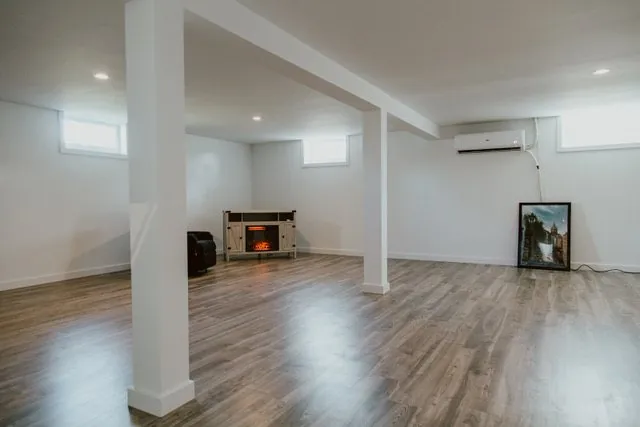
A basement floor in Central Alberta has two enemies: moisture coming up through the concrete slab, and cold radiating off that same slab all winter. Pick the wrong flooring and it cups, delaminates, or just feels miserable underfoot in January. Pick the right one, and add a proper subfloor, and the basement feels like part of the house.
We finish basements across Red Deer and Central Alberta through the winter, and flooring is one of the choices homeowners get wrong most often on their own. Here is how the common options stack up over a cold slab, and what we put under them.
First, the Subfloor
The flooring you see is only half the system. What sits between it and the concrete is what keeps you warm and dry.
Concrete slabs let moisture vapour through, even when they look bone dry, and they stay cold. Laying flooring directly on the slab is asking for trouble. We use a subfloor system that creates an air gap and a thermal break: dimpled plastic subfloor panels, or sleepers with rigid foam between them. That gap lets the assembly breathe and keeps the finished floor a few degrees warmer.
This is not an upgrade to skip to save money. In an Alberta basement the subfloor is the difference between a floor that lasts and one that fails in a few winters.
Is vinyl plank good for a basement?
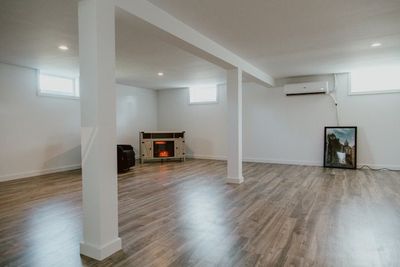
For most basements, luxury vinyl plank (LVP) is what we recommend and install most. It is waterproof, it handles a bit of temperature swing without cupping, and if a pipe ever lets go you can pull and replace the affected planks. It comes in wood looks that hold up well and feel warm enough over a proper subfloor.
Go with a quality rigid-core product, often labelled SPC, in a thicker plank of about a quarter inch with an attached pad. Cheap thin vinyl telegraphs every imperfection in the slab and dents easily. This is not the place to buy the bargain box.
Tile: Great for Bathrooms and Entries
Porcelain or ceramic tile is nearly bulletproof against moisture, which makes it the right call for a basement bathroom or a walk-in from the garage. The catch is cold. Tile does nothing to slow heat loss to the slab, so a tile floor in an Alberta basement is cold unless you put electric in-floor heating under it. In a bathroom that heat is worth every penny. Across a whole basement, tile plus in-floor heat gets expensive fast, so most people reserve it for wet areas.
Is carpet a good idea in a basement?
Carpet is the warmest thing underfoot and it deadens sound between floors, which people like in a basement rec room or bedroom. The caveat is moisture. If your basement has any history of water, carpet holds it and grows mould. Over a proper dimpled subfloor with a moisture barrier, and in a basement with no water issues, carpet is fine and cozy. We would not lay it directly on slab, ever.
Can engineered hardwood go in a basement?
Engineered hardwood is more stable than solid wood, but it is still wood, and basements are the toughest place to keep wood happy. It can work over a good subfloor with tight humidity control, but if you want a real wood look with less risk, a quality LVP is the safer bet down here. Solid hardwood does not belong on or near a slab at all.
What to Avoid
- Solid hardwood directly on or near the slab. It will move with the moisture and cold.
- Laminate in any area that might get wet. Standard laminate uses a fibreboard core that swells and never recovers once it takes on water.
- Flooring straight on bare concrete. No matter the product, skip the subfloor and you invite cold and moisture problems.
A Simple Way to Choose
Rec room or bedroom, no water history: LVP over a dimpled subfloor, or carpet if you want it warmer and softer. Bathroom or garage entry: tile with in-floor heat. Whole open basement on a budget: LVP throughout, with in-floor heat under any tile you add in the bathroom. That covers the large majority of Central Alberta basements we finish.
Frequently Asked Questions
Can I put flooring directly on my basement concrete?
We do not recommend it. Concrete passes moisture vapour and stays cold, so you want a subfloor with an air gap and thermal break underneath. It protects the flooring and makes the room warmer.
Is vinyl plank warm enough for an Alberta basement?
Over a proper subfloor, yes. LVP itself is not a big insulator, but the dimpled subfloor or foam beneath it creates the thermal break that keeps the floor comfortable through winter.
Do I need in-floor heat in a basement?
You need it under tile, which is otherwise cold on a slab. Under LVP or carpet with a good subfloor it is a nice comfort upgrade but not required. Many homeowners put it only in the basement bathroom.
What flooring should I avoid in a basement?
Solid hardwood and standard laminate near a slab, and any soft flooring laid directly on bare concrete. Moisture and cold will find the weak point.
If you are planning a basement floor and are not sure what will hold up over your slab, book an in-home consultation with Green Ladder. We will check your basement for moisture, in Red Deer or anywhere in Central Alberta, and recommend a floor system that lasts.
Basement Renovations
Basement renovations and full basement development in Red Deer and Central Alberta, built dry and warm for Alberta winters.
See Our Basement Renovations Work →Before you sign a quote: What a complete basement quote includes
More from the Green Ladder Blog
David Hutten
Owner, Green Ladder Contractors
David Hutten started building at age 10 and has 25 years of hands-on construction experience. Green Ladder Contractors builds custom outdoor living spaces, decks, fences, pergolas, and landscaping, across Red Deer and Central Alberta.
Ready to start your project?
Book a free 15-minute discovery call. We'll walk through your vision, budget, and timeline.